


Did you know that even a small leak in your pool floor can lead to significant water loss and costly repairs? Pool owners often face the unexpected challenge of leaks, which can not only disrupt your enjoyment but also impact the integrity of your pool. Learning how to quickly patch a pool floor is essential for maintaining your oasis and ensuring it remains a source of relaxation and fun.
In this guide, we’ll walk you through practical, emergency fixes for leaks that anyone can tackle. Whether you’re dealing with a minor crack or a stubborn leak, having the right techniques at your fingertips allows you to take action swiftly and effectively. With a few simple steps, you can safeguard your pool from further damage and enjoy peace of mind, knowing you are equipped to handle these common issues. Ready to dive in? Let’s get started on patching that pool floor!
How to Identify Pool Floor Leaks Quickly
Identifying pool floor leaks quickly can save you time, money, and frustration, allowing you to address issues before they escalate. One of the first steps in uncovering a leak is to conduct a visual inspection. Thoroughly check the pool floor for any cracks, discoloration, or soft spots in the surface, as these can be telltale signs of water loss. Often, areas that appear discolored may indicate wetness beneath the surface, suggesting a potential leak.
Additionally, performing a simple “bucket test” can be beneficial. Fill a bucket with water and place it on the pool’s steps, making sure the water level in the bucket is the same as the pool water level. Mark the levels on both the bucket and the pool wall, and after 24 hours, check both levels again. If the water level in the pool has dropped significantly compared to the bucket, it points to a leak rather than just evaporation.
Another effective method entails using dye to trace leaks. Introduce a few drops of dye near suspected leak areas, such as the edges of fittings or skimmers. If a leak is present, the dye will be drawn towards the leak, helping to pinpoint its location. To ensure the best results, this should ideally be done when the wind is calm to prevent interference with the dye spread.
Finally, it can be worthwhile to check all connected plumbing and equipment. Look for wet patches or signs of leaking hoses, as issues in these areas can also contribute to water loss. By combining these techniques, pool owners can significantly enhance their ability to quickly and accurately identify pool floor leaks, setting the stage for effective emergency patching and long-term repairs.
Essential Tools for Quick Pool Repairs
To effectively address a leaking pool floor, having the right tools on hand can make all the difference between frustration and a successful emergency repair. When dealing with water loss, a few essential items can facilitate quick and efficient patching, ensuring your swimming pool remains a safe and enjoyable oasis. Here’s what you need to prepare before you start the repair process.
A reliable pool repair kit is vital. This kit should include a variety of items such as waterproof tape, patching material suitable for your pool type (like vinyl or concrete), and a putty knife for applying patches. Additionally, keep a bucket and sponge available for water removal, especially if you’re working in wet conditions. A pressure gauge can also be helpful for assessing the effectiveness of your repairs by measuring water loss after patching.
In addition to your repair kit, access to cleaning supplies such as a brush and a hose ensures that the area around the leak is clean and dry before applying any patches. This helps the materials adhere correctly and guarantees a more durable repair. Dye testing kits are also beneficial-they allow you to confirm the exact location of a leak, aiding in more focused repairs.
Lastly, for those who want to enhance their repair setup, consider including a wet/dry vacuum to manage water in and around the affected area effectively. By equipping yourself with these essential tools and materials, you empower yourself to make effective emergency repairs quickly, ensuring minimal disruption to your pool enjoyment and preventing further damage to your pool structure.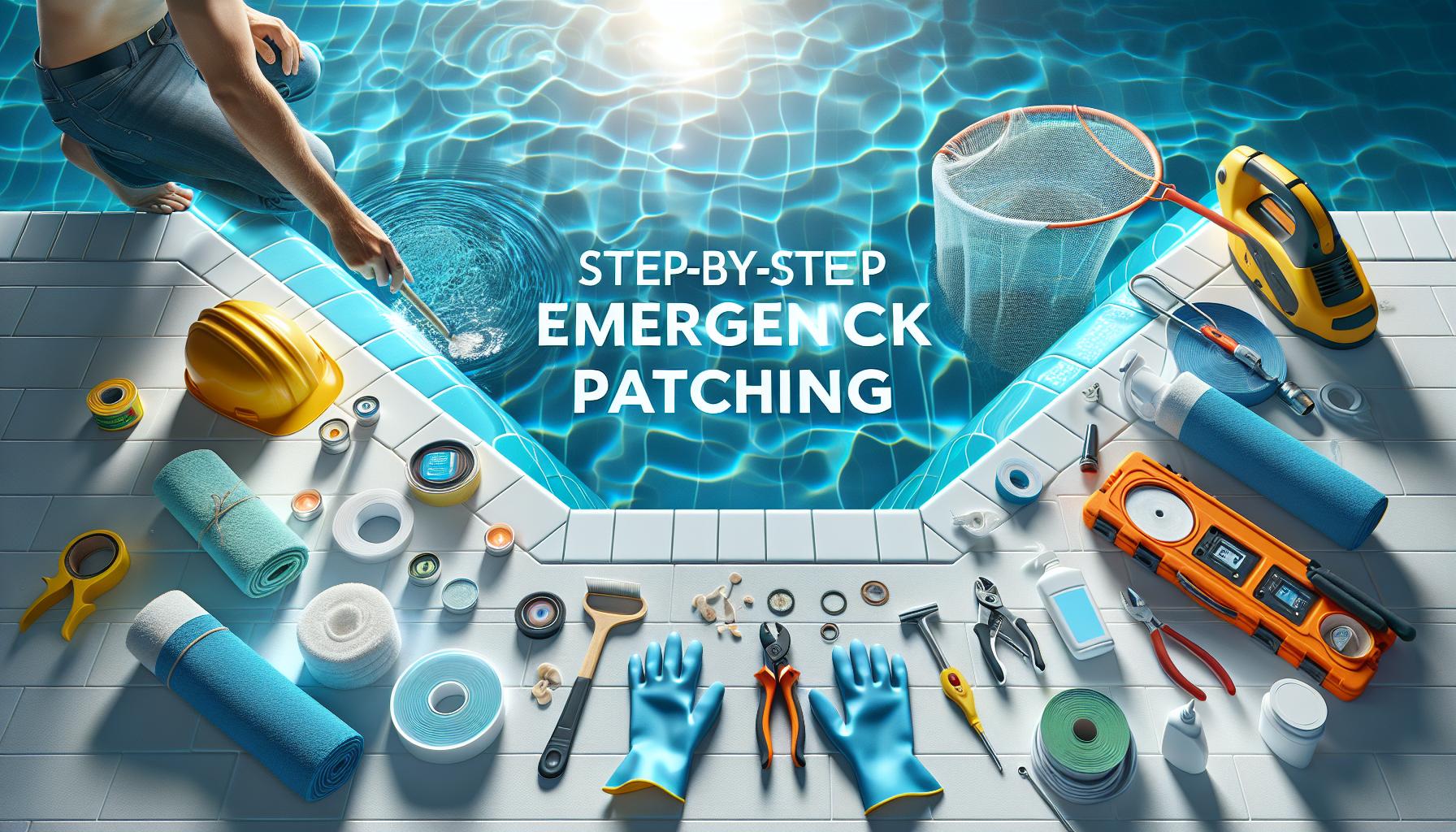
Step-by-Step Emergency Leak Patching
Identifying and patching a leak in your pool can be a daunting task, but with a systematic approach, you can restore your pool floor integrity quickly and effectively. Follow these steps to ensure a successful emergency repair while minimizing water loss and protecting your pool’s structure.
1. Locate the Leak
Begin by pinpointing the exact location of the leak. If you’re unsure where the leak is, consider using a dye testing kit. Gently release dye near suspected areas and observe if it gets drawn into any cracks or holes. Once you identify the site, dry the area thoroughly before proceeding with repairs.
2. Clean the Affected Area
Next, prepare the surface for patching. Use a combination of a brush and hose to clean the area, removing any debris, algae, or loose material. A clean surface is essential for ensuring the adhesive bonds properly. After cleaning, allow the area to dry completely.
3. Apply the Patch
Select a suitable patching material based on your pool type (vinyl or concrete). For vinyl pools, use a vinyl patch kit; for concrete, consider using hydraulic cement or a concrete repair compound.
- Mix the patching material according to the manufacturer’s instructions.
- Apply the patch: Use a putty knife to spread the material over the leak site, ensuring it’s filled adequately.
- Feather the edges: Smooth out the edges of the patch to seamlessly blend it with the surrounding area, enhancing the repair’s durability.
4. Allow Proper Curing Time
Once the patch is in place, allow it to cure as specified in the product instructions. Avoid refilling the pool until the patch has set completely to prevent compromising the repair. If possible, cover the repair site to protect it from debris and disturbances.
5. Monitor the Repair
After the curing time, refill your pool and monitor the repair closely for any signs of continued leaks. If you still notice significant water loss, reassess the patch job or reach out to a professional for further inspection.
By following these straightforward steps, you can effectively patch a leak in your pool floor and minimize downtime. Regular maintenance checks can help prevent future leaks, ensuring your pool remains an enjoyable retreat for years to come.
Common Pool Floor Leak Causes and Solutions
Identifying the root causes of pool floor leaks can be the key to quick and effective repairs. Leaks are often more than just an inconvenience; they can indicate underlying structural issues or wear and tear. Common culprits include cracks in the surface, erosion caused by chemicals, and even shifts in the ground beneath the pool. Understanding these factors allows pool owners to take proactive steps toward alleviating potential water loss and ensuring a safe swimming environment.
One of the most prevalent causes of leaks is surface cracking. These can occur in both vinyl and concrete pools due to temperature fluctuations, aging, or improper installation. Regular inspections can help identify any signs of cracking early. To address surface cracks, use appropriate patching materials-hydraulic cement for concrete, or a vinyl patch kit for vinyl pools-to seal the leaks effectively. For larger cracks, consider applying a more extensive repair method, such as resurfacing.
Erosion is another common issue, often exacerbated by unbalanced pool chemistry, which can deteriorate the pool’s surface over time. Ensure that your pool water’s pH, chlorine, and alkalinity levels are regularly monitored and maintained within recommended ranges to minimize corrosion. If erosion is already present, patching with suitable materials can help mitigate further damage. To safeguard against future leaks, routinely check your skimmer and main drain for possible wear, as these areas are vulnerable due to frequent use.
Additionally, tree roots or shifting soil can exert pressure on pool structures, leading to leaks. If you suspect external factors are damaging your pool, consider landscaping solutions or installing barriers to protect the pool’s integrity. When dealing with stubborn leaks, utilizing professional leak detection services can provide clarity and targeted solutions.
By staying vigilant and addressing these common leak causes, pool owners can not only patch existing leaks quickly but also implement preventive measures that extend the life of their pool. Regular maintenance and prompt repairs can ensure that your pool remains a safe and enjoyable retreat for years to come.
Choosing the Right Materials for Patching
pool leaks is crucial for ensuring a long-lasting and effective repair. The type of patching material you use will depend largely on the pool’s construction material and the nature of the leak. Incorrect materials can lead to further damage, so it’s essential to understand your options.
For concrete pools, hydraulic cement is often the go-to choice. This material can expand as it cures, effectively sealing cracks and preventing water from leaking through. It’s not only strong but also resistant to the harsh chemicals typically found in pool water. When applying hydraulic cement, ensure that you clean the area thoroughly and keep it moist before applying the patch for optimal adhesion. You can also consider using a concrete resurfacer for larger areas with significant wear or extensive cracking.
If your pool is vinyl-lined, it’s imperative to use vinyl patch kits specifically designed for pool liners. These kits usually include a flexible adhesive and vinyl patches that can easily conform to the shape of the surface. Start by thoroughly cleaning the area around the leak and drying it completely before applying the adhesive and patch. Make sure you press firmly to eliminate any air bubbles that might compromise the seal.
For fiberglass pools, a specialized fiberglass repair kit will be ideal. These kits often include resin, hardeners, and fiberglass cloth. To patch, sand the area around the leak for better adhesion, mix the resin according to the instructions, and apply it carefully. Once cured, sand it down to match the pool’s surface for a seamless finish.
When choosing materials, always consult the manufacturer’s guidelines or seek expert recommendations to ensure compatibility with your pool type. Proper selection and application of patching materials not only provide a quick fix but also help prevent future leaks, ensuring your pool remains a safe and enjoyable space. Remember, whatever material you choose, take your time and follow application instructions closely for the best results.
Safety Tips for DIY Pool Repairs
When attempting to patch a pool floor yourself, keeping safety at the forefront of your process is essential. DIY repairs can seem daunting, but understanding and implementing safety measures can significantly reduce risks. One of the first steps is to ensure you have the appropriate personal protective equipment (PPE). This includes gloves to protect your hands from harsh chemicals and sharp edges, safety goggles to shield your eyes from debris and dust, and non-slip shoes to maintain stability, especially when working around water.
Before starting any repair work, it is vital to assess the area for hazards. Remove any debris, such as leaves or tools, that might cause slips. If you’re working with chemicals-like adhesives or sealants-ensure you’re in a well-ventilated area to avoid inhaling fumes. Read all safety labels and instructions on your products meticulously to understand any associated risks. If possible, conduct repairs during daylight when visibility is optimal, rather than working under artificial lighting which may obscure potential hazards.
When using tools for repairs, ensure they are in good working condition and suited for the task. Notably, electrical tools must be kept away from water. If you are using a wet saw or any power equipment near the pool, have a GFCI outlet in place to prevent electric shocks. Make sure you have a first-aid kit accessible in case of minor injuries during the repair.
Lastly, while DIY can be rewarding, recognize your limits. If you encounter a problem that feels beyond your expertise or if the leak persists after your repairs, it’s always best to consult a professional. Remember, prioritizing safety not only protects you but also ensures your pool remains a safe environment for family and friends.
Temporary Fixes vs. Permanent Solutions
When a pool floor leak occurs, it’s essential to understand the difference between temporary fixes and permanent solutions. Temporary fixes are quick, often simple remedies that can help mitigate immediate issues, allowing you to maintain pool usability without extensive downtime. For instance, using sealants or underwater adhesives can stop leaks rapidly, buying you time to plan for a more comprehensive repair. However, relying solely on these solutions can lead to recurring issues or more extensive damage down the line if the underlying cause remains unaddressed.
Permanent solutions, on the other hand, involve more significant repairs that typically require thoroughly identifying and rectifying the cause of the leak. This may include resurfacing the pool floor, replacing tiles, or addressing structural problems. While these repairs can be more labor-intensive and costly, they provide long-term stability and prevent future leaks. It’s crucial to assess the nature and severity of the leak before choosing a method. If the leak is minor and doesn’t significantly affect water levels or the pool’s integrity, a temporary fix may suffice. However, if you notice rapid water loss, or if the spot has been leaking for some time, a permanent solution should be prioritized.
Key Considerations for Choosing Between Fixes
- Severity of the Leak: Assess how quickly the water is disappearing and where it’s coming from.
- Duration of Use: If the pool is used regularly, a temporary fix may keep it operational while planning permanent repairs.
- Cost: Evaluate your budget; temporary fixes can be cheaper, but consider long-term financial impact.
- Experience Level: Consider whether you are comfortable performing a temporary fix, or if a professional should handle the permanent repair.
In summary, while temporary fixes can be a lifeline during emergencies, they should not be a substitute for thorough, permanent repairs. Balancing immediate needs with long-term sustainability will ensure your pool remains a safe and enjoyable space for years to come.
Preventative Measures to Avoid Future Leaks
One of the most effective ways to ensure that your pool remains leak-free is through consistent maintenance and strategic preventative measures. Implementing a regular inspection routine can significantly extend the life of your pool and prevent unexpected leaks. Start by checking for cracks or shifts in your pool’s structure, paying special attention to areas such as the skimmer, main drain, and the tile line. Use a putty knife to probe these areas for any soft spots-these could indicate underlying problems that may lead to leaks.
To further safeguard your pool, consider investing in high-quality pool covers. A cover not only retains heat and reduces water evaporation but also protects the pool from debris that can accumulate and cause damage over time. Furthermore, maintaining proper water chemistry is crucial. An unbalanced pool can lead to corrosion or scaling, which may compromise the integrity of the pool surfaces, increasing the likelihood of leaks. Regularly test the water and adjust the pH, alkalinity, and calcium hardness levels as needed to keep everything in optimal condition.
Another proactive step involves addressing underground plumbing issues. If your pool relies on a complex plumbing system, consider hiring a professional to inspect the lines periodically. Importantly, any visible piping should also be checked for signs of leaks or deterioration. Additionally, if your pool is located in an area with seasonal temperature fluctuations, proper insulation of any exposed pipes is essential to prevent cracks from freezing and thawing cycles.
Adopting a routine of proper landscaping around your pool can also mitigate leaks. Ensure that soil or foliage does not direct water toward the pool’s structure. Instead, grade the landscape to encourage water to flow away from the pool. Small changes can cumulatively make a significant difference in preventing future issues. By committing to these practical measures, you can keep your pool’s structure sound and enjoy many worry-free swimming seasons.
When to Call a Professional for Help
When dealing with pool floor leaks, the pressing question for many owners becomes, “Am I capable of solving this, or is it time to call in a professional?” Some leaks are straightforward and require simple patching techniques, but there are situations where professional expertise is essential. If you find yourself at a crossroads, consider the complexity of the leak and the tools you have at your disposal.
If a leak is suspected but cannot be located, or if it involves significant damage to the structure or plumbing of the pool, it’s best to consult a professional. They possess specialized equipment such as acoustic leak detectors and infrared cameras that can pinpoint leaks more effectively than a DIY approach. Additionally, if you notice recurrent leaks despite your patching efforts, this often indicates a deeper issue that requires a professional’s insight, potentially relating to aging materials or structural instability.
Signs It’s Time to Call a Pro
Strong indications include:
- Significant water loss that exceeds normal evaporation rates.
- Visible damage such as cracks or large gaps in the pool floor.
- Repeated appearance of leaks after temporary patches.
- Unknown or difficult-to-access leak sources, particularly in underground plumbing.
Furthermore, undertaking repairs beyond your skill level can lead to more substantial damage and increased repair costs. If you’re unsure about how to proceed or lack the proper tools, it’s wiser to engage a professional who can ensure a reliable repair. By knowing when to reach out for help, you safeguard your investment in your pool and preserve the enjoyment it brings.
Maintaining Your Pool After a Repair
After successfully patching a pool floor leak, it’s essential to adopt a proactive maintenance routine to ensure the longevity of your repairs and the overall stability of your pool. A well-maintained pool not only enhances its aesthetic value but also minimizes the chances of future leaks. Regular monitoring of water levels is crucial; keep an eye on your pool’s water line. If you notice significant fluctuations, this could indicate an underlying issue that needs immediate attention.
To maintain your pool effectively, start by performing routine checks on the repair area. Look for any signs of moisture, peeling paint, or changes in surface texture around the patch. It’s advisable to wait at least 24 hours after the repair before swimming to allow the patch to cure properly. During this time, test water chemistry to make sure pH and chlorine levels are balanced, as stabilized water conditions can help protect repaired areas from chemical wear.
Regular Cleaning and Upkeep
Routine cleaning plays a vital role in pool maintenance. Debris and dirt can accumulate on the pool floor and, if left unattended, can contribute to deterioration. Here are some maintenance tasks to keep in mind:
- Skimming: Remove leaves and debris daily to prevent buildup.
- Vacuuming: Regularly vacuum the pool to keep it clean and prevent algae growth.
- Brushing: Brush the walls and floor at least once a week to remove dirt and prevent surfaces from becoming porous.
Additionally, ensure that your pool’s filtration system is functioning optimally. Clean or replace your filter as needed, typically every 4-6 weeks, depending on usage and environmental factors. This will not only keep your water clear but also help your patches set and cure properly by maintaining optimal water flow.
Long-term Monitoring
Post-repair, it’s wise to establish a long-term monitoring plan. Check for any unusual changes in your pool’s water level, and keep a log of any maintenance or observed issues. This log will help you track patterns over time and identify areas that might need professional inspection.
Following these guidelines will not only protect your recent repairs but will also contribute to a healthier and more enjoyable swimming experience. Remember, a small effort in maintenance today can prevent costly repairs tomorrow.
Cost Considerations for Pool Floor Repairs
The financial implications of pool floor repairs can vary significantly based on the damage’s extent, the materials used, and whether you choose to handle the repairs yourself or hire a professional. As a pool owner, being aware of these factors can help you make informed decisions that align with your budget and maintenance needs.
One of the most significant cost considerations is the assessment and identification of the leak. If you can locate and patch the leak on your own, you can save a substantial amount compared to hiring a specialist just for leak detection. However, suppose the leak is not easily identified or requires specialized tools (such as pressure testing or leak detection equipment). In that case, the costs can quickly escalate, often ranging from $100 to $500 for professional services.
Once you’ve identified the leak, repair materials also play a crucial role in overall costs. Quick patch solutions, such as underwater epoxy or adhesive sealants, typically cost between $15 and $40 per tube or container. In contrast, more long-term solutions, like retiling or resurfacing, can cost significantly more, depending on the size of the repair area and the complexity involved. For larger scale repairs, you might be looking at a budget from $500 to several thousand dollars.
Moreover, consider ongoing maintenance expenses once repairs are completed. You’ll want to routinely check for new leaks, monitor water levels, and ensure that your pool’s circulation and filtration systems are functioning correctly. Regular maintenance may add minor costs, but it is essential for preventing future issues and costly repairs. Implementing preventative measures is an invaluable investment that can safeguard your financial resources in the long run.
Ultimately, understanding these cost factors empowers you to navigate the pool maintenance landscape effectively. Planning and proactive measures can keep costs manageable while ensuring that your pool remains a safe and enjoyable space for you and your family.
DIY vs. Professional Repairs: Pros and Cons
Choosing between DIY repairs and hiring a professional for pool floor leaks can significantly influence both your stress levels and your wallet. When faced with a leak, many pool owners may initially lean towards taking matters into their own hands, driven by a desire to save costs and gain the satisfaction of a self-completed project. However, this approach requires careful consideration of the pros and cons associated with each option.
For DIY repairs, the main advantages include cost savings and flexibility. Performing your own repairs can substantially reduce labor costs, especially if you’re skilled with basic tools and materials. Utilizing patching products like underwater epoxy can offer a quick and effective solution at a relatively low price point. Additionally, undertaking repairs yourself grants you control over the timeline; you can address the issue at your convenience without waiting for a contractor’s availability. In contrast, the learning curve involved in these repairs can be steep, and missteps could result in more significant issues, leading to higher costs down the line.
On the other hand, hiring a professional provides a peace of mind that is invaluable, especially for complex or serious leaks. Professionals possess specialized tools and expertise in leak detection that can pinpoint problems quickly and accurately, preventing unnecessary damage. Their experience allows for proper repairs that comply with safety standards, ensuring that no future setbacks occur. However, this convenience does come with a price. Professional services can be costly, sometimes ranging between $100 and $500 for assessments alone, depending on the complexity of the leak and the extent of repairs needed.
Lastly, it’s important to weigh the long-term implications of your choice. DIY repairs might seem economical initially, but they could lead to recurring issues if not done correctly. Professional repairs, while more expensive upfront, can save you money and stress over time by providing lasting solutions. Understanding both sides of the equation empowers you to make a well-informed decision that best suits your immediate needs and future goals for pool maintenance.
Q&A
Q: How can I quickly find a leak in my pool floor?
A: To quickly find a leak in your pool floor, visually inspect for wet spots or bubbles. Consider using the bucket test: fill a bucket with water and place it on the pool step. If the water level drops in the pool but stays in the bucket, you likely have a leak in the pool.
Q: What materials are best for patching a pool floor?
A: The best materials for patching a pool floor include hydraulic cement for quick fixes, epoxy sealants for underwater repairs, and special pool patching kits. These materials adhere well to concrete and can withstand water pressure, ensuring a reliable temporary or permanent fix.
Q: Can I use duct tape to fix a pool leak?
A: While duct tape may provide a temporary seal for small leaks, it’s not a long-term solution. Instead, opt for specialized pool repair products like epoxy or patch kits that are designed to withstand water pressure and are more durable against pool chemicals.
Q: When should I use a patch compared to a complete pool floor repair?
A: Use a patch for minor leaks or small areas of damage that can be easily identified. If you have multiple leaks, extensive damage, or soil erosion, a complete pool floor repair may be necessary to ensure pool functionality and safety.
Q: How long does a temporary patch last on a pool floor?
A: A temporary patch can last from a few days to several weeks, depending on the materials used and the pressure of the water. For longer-lasting integrity, aim to address the leak with permanent solutions as soon as possible to prevent further damage.
Q: What should I do if my pool floor patch starts to leak again?
A: If your pool floor patch starts to leak again, drain the pool below the patch level, clean the area thoroughly, and reapply the patch with fresh material. Ensure to follow manufacturer instructions for the best adherence and effectiveness.
Q: How can I prevent future leaks in my pool floor?
A: To prevent future leaks, regularly inspect your pool for cracks, maintain proper water levels, and use protective pool liners. Additionally, avoid excessive pressure from water or soil around the pool that can exacerbate cracking.
Q: What are the signs that I need to call a professional for pool repairs?
A: Signs that you should call a professional include visible structural damage, multiple leaks, sudden water loss, or extensive chemical imbalance issues. A professional can provide a thorough assessment and effective long-term solutions.
Future Outlook
Now that you’re armed with the essential steps to quickly patch your pool floor and tackle those unexpected leaks, don’t wait for problems to escalate. Maintain the integrity of your pool and enjoy a worry-free swimming experience! For deeper insights, explore our resources on the “ABC’s of Pool Water Chemistry” for optimal maintenance strategies or check out our guide on “Black Algae” to safeguard your pool’s aesthetics.
Feeling inspired? Join our community by signing up for our newsletter to receive expert tips delivered straight to your inbox, and share your success stories in the comments below. Your journey doesn’t end here-discover more about keeping your pool pristine and prepare for the pool season ahead! Remember, proactive maintenance is key to a beautiful and safe pool. Reach out today if you need further guidance, and let’s make your pool the place to be this summer!


