Are you planning to install or maintain an above-ground pool? Knowing how many gallons your pool holds is crucial for proper water management, chemical balancing, and maintenance planning. An accurate volume calculation not only helps in determining the right amount of chemicals to add but also assists in understanding filtration needs and heating requirements.
Many pool owners underestimate the significance of this calculation, leading to issues such as mismanagement of chemicals, ineffective cleaning, and even safety concerns. By understanding how to calculate the volume of your pool confidently, you can ensure a safer and more enjoyable swimming experience. In this article, we’ll guide you through the steps to accurately determine your pool’s capacity, empowering you to manage your backyard oasis like a pro. Dive in and discover how easy it can be!
How to Measure Your Above Ground Pool Accurately
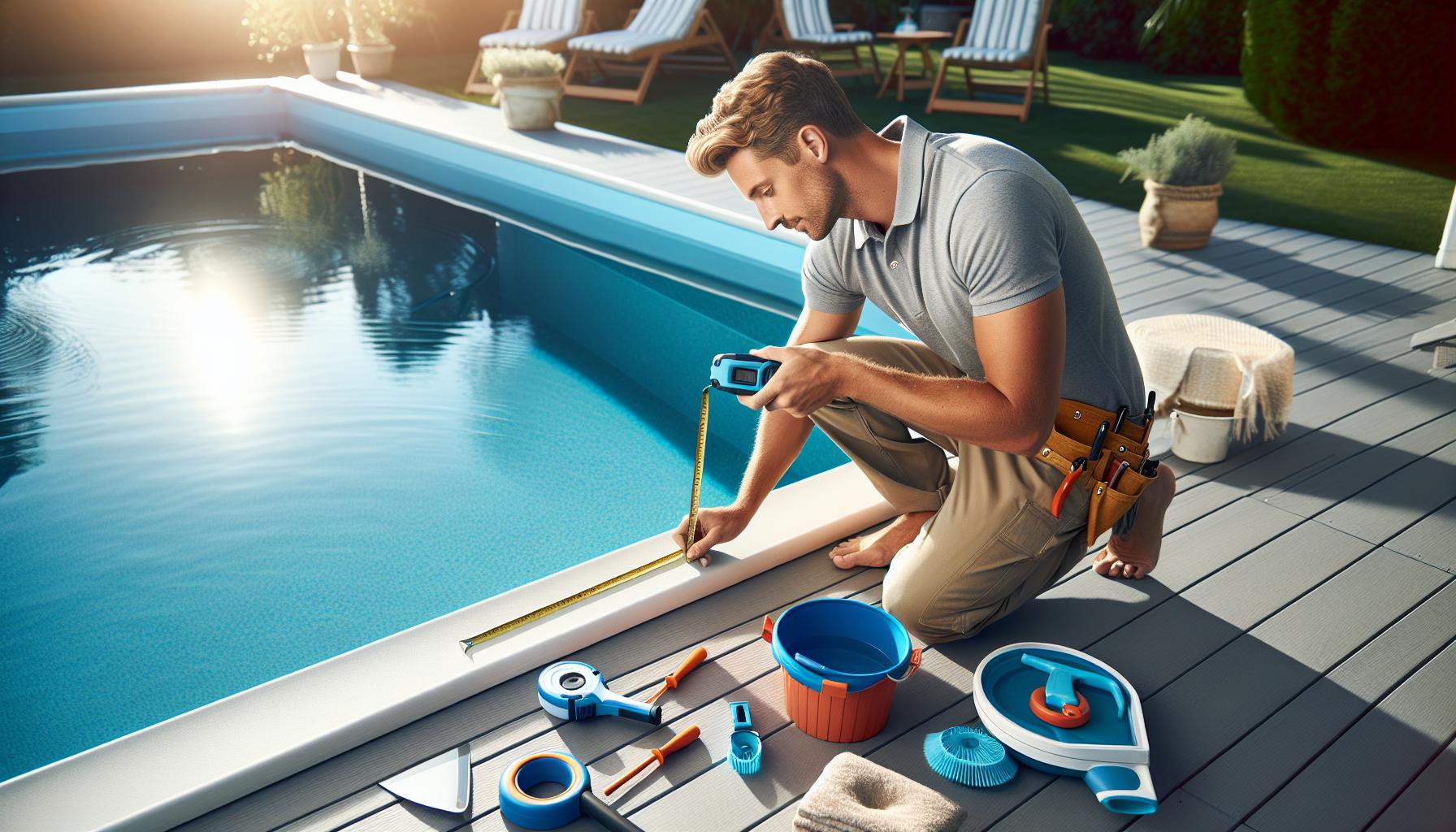
Measuring your above ground pool accurately is essential for a variety of reasons, from determining the right amount of chemicals to maintaining optimal water levels. An interesting point to note is that knowing the exact volume can also impact heating costs and filtration efficiency. Whether you’re preparing for a pool party or simply ensuring a safe swimming environment, understanding how to measure your pool correctly can make all the difference.
To begin, it’s crucial to identify the shape of your pool, as this will dictate the measurement method. Most above ground pools are round, oval, or rectangular. For a round pool, measure the diameter across the center. For oval pools, measure both the length and width, while for rectangular pools, simply measure the length and width. Once you have these dimensions, you can apply appropriate formulas to calculate the volume in gallons. Here’s a quick reference:
- Round Pool: Volume = (Diameter x Diameter x Depth x 5.9)
- Oval Pool: Volume = (Length x Width x Depth x 6.7)
- Rectangular Pool: Volume = (Length x Width x Depth x 7.5)
Level Measurement: Ensure that your measurements are taken at the deepest part of the pool, and always use units consistent across all dimensions (feet or meters) for accurate results.
For added precision, consider using a measuring tape for dimensions and a level to confirm that the ground beneath the pool is consistent. Some pool owners opt for water level sensors that can give continuous readings, helping to monitor the pool’s water level on a regular basis.
By following these steps, you can measure your above ground pool accurately, ensuring optimal maintenance and a safe swimming experience for all users.
Calculating Pool Volume: Step-by-Step Guide
Calculating the volume of your above ground pool is not just a helpful skill-it’s essential for ensuring proper maintenance, chemical balance, and overall performance. Knowing the exact volume can optimize everything from pool heating to filtration efficiency, allowing you to enjoy a safe and refreshing swimming environment. Follow this straightforward guide to measure your pool’s volume accurately and calculate the number of gallons it holds, regardless of its shape.
Start by identifying the shape of your pool, which typically falls into one of three categories: round, oval, or rectangular. Properly taking measurements is crucial for accurate calculations. For round pools, find the diameter across the center and then measure the depth at the deepest point. For oval pools, you will need both the length and width, along with the depth. If your pool is rectangular, measure the length, width, and depth. Once you have these dimensions, you can apply the corresponding formulas to determine the volume in gallons:
- Round Pool: Volume = (Diameter x Diameter x Depth x 5.9)
- Oval Pool: Volume = (Length x Width x Depth x 6.7)
- Rectangular Pool: Volume = (Length x Width x Depth x 7.5)
While measuring, remember that consistency is key. Always use the same unit of measurement (feet or meters) throughout the process. Additionally, take care to ensure that the ground under your pool is evenly leveled, as slope or uneven surfaces can affect depth readings. For the best results, it’s wise to use a flexible measuring tape and a level tool. If available, employing a digital water level sensor can also help monitor fluctuations in water depth, giving you ongoing insights into your pool’s water volume.
Armed with these steps and formulas, calculating your above ground pool’s volume becomes a manageable task. Ensuring accurate measurements not only contributes to the longevity of your pool system but also enhances your overall swimming experience. With confidence in your calculations, you’ll be well-equipped to maintain the proper water chemistry and keep your pool inviting for all swimmers.
Understanding Pool Shapes and Their Impact on Volume

Understanding the shape of your pool is crucial for accurately calculating its volume, as each configuration-whether round, oval, or rectangular-has its own unique characteristics that directly impact the amount of water it can hold. Many pool owners underestimate how this geometric design influences not only the total gallon capacity but also the maintenance and chemical balance needed to keep your pool functioning optimally.
Round above-ground pools are often popular for their simplicity and uniformity in design. When calculating their volume, the formula relies heavily on the diameter, making it straightforward: the larger the diameter, the greater the volume. This simplicity can lead to easier maintenance and chemical balancing since the water has a consistent depth throughout.
In contrast, oval pools bring a different set of complexities. With both length and width factored into the volume calculation, the dimensions can vary significantly across different models and setups. This variation means that precise measurements are critical; even slight discrepancies can lead to miscalculations in volume, affecting everything from sanitation levels to heating costs. Oval pools often require a bit more attention during maintenance due to these variations in shape, which can lead to differences in water circulation and chemical distribution.
Finally, rectangular pools can be a bit more versatile in terms of design and aesthetics, but they too come with challenges. The depth can vary widely, especially if the pool features a shallow end and a deep end. This variance necessitates careful measurement of each section to avoid over or underestimating the total volume. Additionally, rectangular pools might require more complex filtration systems to ensure that water chemistry remains balanced, given their size and shape.
By recognizing these different pool shapes and how they affect volume calculations, pool owners can take the necessary steps to maintain their pools effectively. Accurate measurements are the foundation of sound maintenance practices, ensuring that you can enjoy your swimming space to the fullest while keeping it safe and enjoyable for all swimmers.
Common Mistakes in Pool Volume Calculations
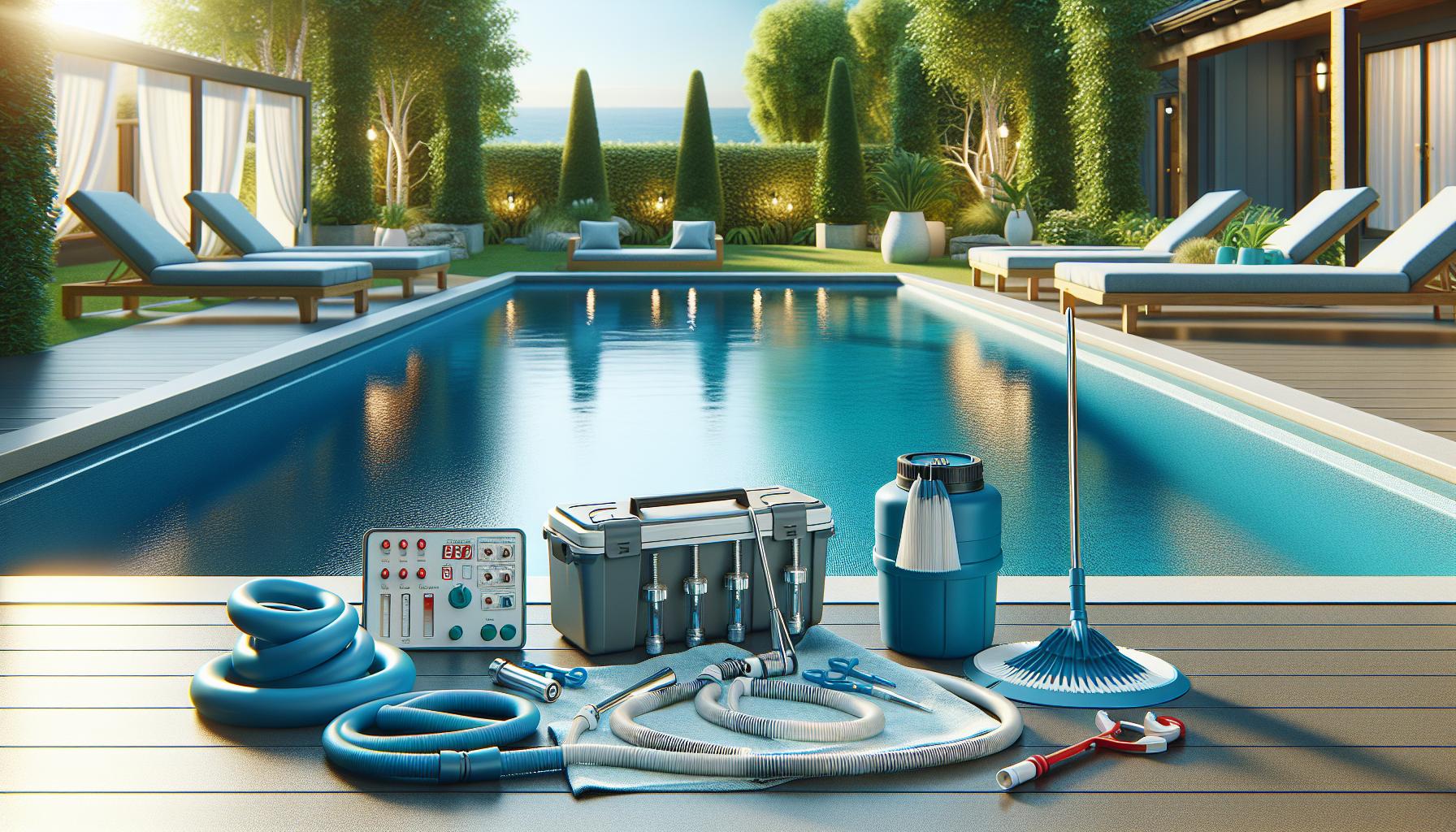
Many pool owners inadvertently make errors during volume calculations, which can lead to complications in maintenance, chemical balancing, and ultimately the overall enjoyment of their swimming experience. A critical mistake is relying solely on rough estimates instead of taking precise measurements. For instance, failing to measure the depth accurately in rectangular pools can lead to significant discrepancies in total volume calculations. If your pool has varying depths, it’s essential to calculate the volume for each section separately and then sum them up for an accurate total.
Another common pitfall is neglecting the impact of pool shape on water capacity. Each pool shape-be it round, oval, or rectangular-requires different formulas for volume calculation. When calculating the volume of oval pools, many owners mistakenly only consider one dimension, forgetting that both the length and width play crucial roles. This oversight can lead to underestimating the amount of water needed for proper maintenance, affecting chemical levels and filtration efficiency.
In addition, the water level can also mislead volume calculations. Some pool owners assume the pool is filled to the top when, in reality, it may not be. Skimmers and other equipment can affect the actual water level and thus the overall volume. Therefore, measuring the actual water level, in conjunction with accurate shape calculations, is essential for ensuring that you have the right figure for your maintenance needs.
Finally, don’t forget to account for water temperature changes and evaporation. As water evaporates, the pool’s volume decreases, leading to concentrated chemicals which can affect water quality. Regular checks on water levels and adjusting for evaporation are vital practices to keep your pool in optimal condition. By being aware of these common mistakes and taking proactive measures, you can confidently manage your pool’s volume and maintain a healthy swimming environment.
Essential Tools for Pool Volume Measurement
To achieve an accurate measurement of your above ground pool’s volume, having the right tools on hand is essential. Many pool owners underestimate the importance of precision when calculating gallons, leading to imbalances in chemical treatments and maintenance efforts. Fortunately, with a few essential tools and simple techniques, you’ll be equipped to confidently assess your pool’s volume.
Start with a measuring tape or a long ruler-these instruments are your first line of action for determining dimensions such as length, width, and depth. For oval and irregularly shaped pools, a flexible measuring tape can be particularly useful. When measuring depth, consider using a weighted line or a pool stick to ensure accurate readings. Next, a calculator (or a smartphone with a calculator app) will aid in computing volume using the appropriate formulas based on your measurements.
Additional Resources
Utilizing a pool volume calculator-available as online tools or mobile apps-can save time and reduce errors significantly. These calculators often allow you to input measurements directly and will compute the necessary volume with ease. For those who prefer traditional methods, maintaining a notebook to jot down measurements can help track changes over time, especially useful when calculating water lost to evaporation or maintenance activities.
Finally, consider investing in a water level indicator or sensor system. These devices can monitor the water level changes in real time and alert you to significant fluctuations, enabling you to maintain optimal water levels effortlessly. By equipping yourself with these essential tools, you’ll not only ensure accurate volume measurement but also enhance the overall health and maintenance of your pool.
Total Gallons Calculation: Simple Formulas Explained
To effectively calculate the total gallons of water in your above ground pool, it’s essential to understand the basic formulas tailored for various pool shapes. Accurate calculations are vital not only for maintaining proper chemical balance but also for ensuring the longevity of your pool equipment. The volume of water in your pool directly influences maintenance routines, such as filtration and chemical application, making correct volume measurement crucial.
For rectangular or square pools, the formula is straightforward: multiply the length (in feet), width (in feet), and average depth (in feet), then multiply the result by 7.48 (the number of gallons in a cubic foot). The formula looks like this:
Gallons = Length x Width x Average Depth x 7.48
For example, a rectangular pool measuring 12 feet long, 6 feet wide, and an average depth of 4 feet would have a volume of:
Gallons = 12 x 6 x 4 x 7.48 = 2,694.72 gallons
For circular pools, the process involves calculating the radius. The formula for gallons in a circular pool is:
Gallons = 3.14 x (Radius x Radius) x Average Depth x 7.48
If your circular pool has a radius of 3 feet and an average depth of 4 feet, you would calculate:
Gallons = 3.14 x (3 x 3) x 4 x 7.48 = 339.12 gallons
Estimating for Irregular Shapes
Many above ground pools have irregular shapes. In such cases, divide the pool into smaller, manageable sections (rectangles, circles, etc.), calculate each section’s volume separately using the formulas above, and then sum the totals. This method provides a more accurate representation of your pool’s total capacity.
Tips for Error-Free Calculations
- Measure accurately: Ensure your measuring tape is straight and level to get precise dimensions.
- Take average depth seriously: If your pool has varying depths, measure at several points and calculate the average.
- Double-check your calculations: A simple mistake can lead to major discrepancies in chemical dosing.
Understanding these formulas and processes enables you to manage your pool’s water level better, ensuring optimal conditions for both enjoyment and maintenance. Accurate volume calculations empower you to handle your pool more effectively, enhancing your overall experience as a pool owner.
Factors That Affect Water Capacity in Pools
The water capacity of your above ground pool can be influenced by a myriad of factors, and understanding these can not only enhance your enjoyment but also streamline maintenance practices. For instance, the pool’s shape plays a pivotal role in its volume. A circular pool, with its radius being a crucial variable in calculations, typically holds less water than a rectangular pool of similar dimensions, due to the difference in geometry. Similarly, the depth, whether consistent or varying, directly affects the total water capacity. Always calculate the average depth if there are multiple levels in your pool to ensure your measurements are accurate.
Environmental factors are also significant. Evaporation can markedly decrease water levels, especially in sunny or windy conditions. Regular checks and refill schedules can help manage this loss. Moreover, debris from nearby trees or plants, like leaves or pollen, can contribute to water displacement and might necessitate more frequent cleaning or refilling to maintain proper water levels.
In addition, the efficiency of your pool’s filtration system can impact water clarity and quality, which may lead to adjustments in your water volume. For instance, if your pool requires heavy backwashing to maintain clean water, this can lead to additional water loss. Being aware of how these elements interact can guide you in optimizing water capacity effectively.
Lastly, maintenance practices are crucial for preserving your pool’s water capacity. Regularly testing and adjusting chemical levels can prevent issues that might otherwise lead to significant water loss, such as algae growth or system leaks. By staying proactive and informed, you can ensure your above ground pool remains in prime condition, enhancing both its longevity and your enjoyment.
Estimating Your Pool’s Water Weight and Cost
Estimating the weight of water in your above ground pool is crucial for a variety of reasons, whether you’re planning for safety while entertaining guests or considering the impact on your yard’s landscaping. Did you know that a gallon of water weighs approximately 8.34 pounds? This means that if you have a moderately sized pool containing around 15,000 gallons, the total water weight would be a staggering 125,100 pounds! Understanding this weight not only helps in assessing any structural concerns but can also aid in calculating the costs associated with filling your pool.
To determine the total weight of the water in your pool, simply multiply the number of gallons by 8.34. For instance, if your pool holds 20,000 gallons, the calculation would be:
20,000 gallons x 8.34 lbs/gallon = 166,800 lbs
Now, let’s move on to the cost associated with filling your pool. The energy costs can vary widely depending on your local water rates. Typically, water costs are billed in units such as per 1,000 gallons. To estimate the total cost for filling your pool, you can use the formula:
Total water cost = (Total gallons / 1,000) x Cost per 1,000 gallons
For example, if your pool holds 15,000 gallons and your local water rate is $5 per 1,000 gallons, it would cost:
(15,000 / 1,000) x $5 = $75
In addition to the initial fill costs, keep in mind the recurring expenses associated with maintaining water levels, such as replenishing water due to evaporation or splashing. Understanding these costs will help you budget effectively for pool maintenance while ensuring a safe and enjoyable swimming environment.
How to Adjust Water Volume for Chemicals and Maintenance
Adjusting the water volume in your above ground pool is crucial for maintaining its chemical balance and overall health. Regular additions of either water or chemicals can alter the levels, impacting water clarity and safety. For example, when you add chlorine or algaecide, the chemical reaction can slightly lower water volume due to evaporation or absorption. Keeping your pool’s volume precise ensures that chemicals work effectively, providing an optimal swim environment.
One of the first steps in adjusting your water volume is to monitor the water level regularly. A simple visual check can help you gauge whether your pool is losing water due to evaporation or leaks. If the water level dips significantly after a hot day or a heavy swim session, it’s time to refill. Here’s a straightforward method to determine how much water to add:
- Check Current Water Level: Use a marked pole or a ruler to measure the current water level from the pool’s skimmer opening.
- Calculate Required Volume: Estimate the ideal water level, typically around the midpoint of skimmer openings. Subtract the current level from the ideal level.
- Convert to Gallons: Use the volume formulas from earlier sections to convert the height difference to gallons, knowing the shape of your pool.
While ensuring optimal water levels, remember that the types and amounts of chemicals you plan to add should also influence your calculations. For instance, if you are planning to raise the chlorine levels, calculate how much water volume is included before making adjustments. A good rule of thumb is that adding one pound of granular chlorine raises the chlorine level in 10,000 gallons by about 4 ppm. This means if your pool holds 15,000 gallons, you need to factor in the right proportion of water adjustment to reach your desired levels effectively.
Finally, after making these adjustments, test the water chemistry to ensure nothing is amiss. Use test strips or a liquid test kit to check for pH, alkalinity, and chlorine levels. Regular maintenance checks will help you catch any discrepancies early on, allowing you to adjust water volume and chemical balance accordingly.
Safety Considerations When Filling Your Pool
Filling your above ground pool can be an exciting yet critical process, requiring careful attention to safety. One of the key considerations when adding water is to ensure the pool’s structural integrity throughout the filling process. Filling your pool too rapidly can lead to uneven water weight distribution, which may cause warping or stress on the pool walls. To mitigate this risk, consider filling your pool slowly, and periodically check the level of water to maintain balance.
Before you start the filling process, assess your water source. If you’re using a garden hose, verify that the hose is in good condition-any leaks can waste water and lead to discrepancies in your calculations. It’s also essential to be aware of local regulations regarding water use, especially if you live in an area experiencing drought or water restrictions.
While filling the pool, keep an eye on the surroundings. Make sure the area around the pool is free of any obstacles like sharp objects or debris that could accidentally fall into the pool. If you have pets or young children, it’s wise to supervise them closely to prevent any accidents. Installing barriers such as a temporary fence can also provide an added layer of security while filling.
Additionally, monitor your water bill. Filling a pool can significantly increase your monthly usage, and understanding this fluctuation will aid in budgeting. If you’re anticipating a high water bill, plan ahead and consult your utility company regarding any available discounts or programs for filling pools. By taking these precautions, you can ensure a safe and efficient filling process for your above ground pool, laying the foundation for enjoyable swimming experiences to come.
Upgrading Your Above Ground Pool: Is It Worth It?
Upgrading to a new above-ground pool can be a major decision, but the benefits often make it worthwhile. Consider the increased enjoyment you’ll get from a newer model that features enhanced durability, aesthetics, and safety. Modern above-ground pools are designed with advanced materials and construction techniques, meaning they can last longer and require less maintenance than older models. If your current pool is showing signs of wear and tear, or if you find yourself constantly battling leaks or structural concerns, an upgrade might save you both time and money in the long run.
One of the most compelling reasons to upgrade is the potential for a larger pool or one with more features. If you have a growing family or frequently entertain guests, a larger pool could provide more space for swimming and lounging. Additionally, newer pools often come equipped with modern amenities such as built-in lighting, upgraded filtration systems, and even integrated heating options. These innovations can enhance your swimming experience, allowing for more enjoyment throughout the swimming season.
Keep in mind that upgrading isn’t just about size and features; it’s also an opportunity to assess efficiency. New pools can be more energy-efficient, resulting in lower utility bills. Look for models with better insulation or those designed to retain heat effectively, as these factors can significantly impact your operating costs. Investing in an upgraded pool with these features could lead to substantial savings over time, making the initial outlay more palatable.
Lastly, consider the overall resale value of your property. An attractive, well-constructed above-ground pool can enhance your home’s appeal to potential buyers. If you’re contemplating selling your home in the future, having an upgraded pool can be a real selling point that sets your property apart. Ultimately, the decision to upgrade should align with your lifestyle needs and budget, but the advantages of modern conveniences, increased efficiency, and enhanced enjoyment often make it a worthwhile consideration.
Tips for Maintaining Optimal Water Levels in Your Pool
Maintaining the right water level in your above-ground pool is crucial not just for comfort but also for optimal performance of your pool equipment and chemical balance. A well-managed water level helps to ensure safety, facilitates effective filtration, and can prevent costly repairs. Keeping water at an appropriate height can also enhance your swimming experience, allowing for better water circulation and cleanliness.
To maintain optimal water levels, start by regularly checking the pool’s water depth, especially after heavy rainfall or evaporation during hot weather. The ideal water level is typically about halfway up the skimmer opening. Here are some steps to keep your pool water level where it should be:
- Regular Monitoring: Check the water level weekly. Use a measuring tape or a stick to gauge how far the water reaches relative to the skimmer.
- Adjusting for Evaporation: Evaporation can significantly reduce water levels during summer months. Use a hose to refill your pool, ensuring to monitor closely so you don’t overfill.
- Using a Cover: When the pool is not in use, consider using a pool cover. This will minimize evaporation and reduce debris, helping your water level to remain stable.
- Incorporate a Float Valve: For a more hands-free approach, installing a float valve can automatically maintain water levels, refilling the pool when they drop below a certain point.
- Inspect for Leaks: If you notice a significant drop in water level, inspect your pool for leaks. Look for moist ground around the pool’s perimeter and check fittings and hoses for cracks.
Another consideration is the effect of adding chemicals. When you adjust water volume for chemicals, ensure that the balance is correct to prevent over-saturation. If you’ve added larger amounts of water or chemicals, it’s advised to retest the water balance and adjust accordingly.
By following these practical steps, you can ensure that your above-ground pool remains at its optimal water level, providing a safe and enjoyable swimming environment. With a little diligence and care, maintaining correct water levels becomes a simple routine that supports the longevity of your pool while enhancing your swimming experience.
Frequently Asked Questions
Q: How do I measure the volume of my above ground pool accurately?
A: To measure your above ground pool accurately, first determine its shape-circular or rectangular. For circular pools, use the formula: volume (gallons) = diameter² × 3.14 × depth × 7.48. For rectangular pools, apply: volume = length × width × depth × 7.48. Always double-check measurements for precision.
Q: What factors can affect the water capacity in my pool?
A: Several factors influence water capacity, such as the pool’s shape, size, and depth. The inclusion of accessories like steps or benches can reduce the total volume. Additionally, water temperature and local weather, which can lead to evaporation, can also impact the pool’s effective water capacity.
Q: How can I adjust the water volume for chemicals and maintenance?
A: Adjust your pool’s water volume by adding or draining water as needed. For chemical balance, ensure your pool is at the optimal level. Regularly test pH and chlorine levels and, if necessary, top up water after heavy swimming activity or after significant rainfall to maintain water quality.
Q: What is the average water weight of an above ground pool?
A: The average weight of water in an above ground pool can be calculated by multiplying the total gallons by 8.34 (the weight of one gallon of water). For example, a pool with 10,000 gallons weighs approximately 83,400 pounds, influencing structural considerations and ground support.
Q: When is it safe to start filling my above ground pool after installation?
A: It is safe to fill your above ground pool after ensuring that the ground is level and the pool structure is stable. Ideally, wait 24-48 hours after installation for any settling to occur before adding water. Always check for leaks before the filling process.
Q: What should I do if my pool water level is too high?
A: If your pool water level is too high, drain some water to bring it back to the appropriate level. Use a submersible pump or let water out through the pool’s waste outlet, ensuring you do not go below the skimmer. This helps maintain efficient filtration and prevents overflow.
Q: How can I maintain optimal water levels in my above ground pool?
A: To maintain optimal water levels, check regularly for evaporation especially in hot weather. Use a pool cover when not in use to minimize water loss, and top off the water as needed. Regularly inspect for leaks, and ensure your pool equipment functions properly.
Q: Why is knowing the gallons in my pool important?
A: Knowing the volume of your pool is crucial for effective chemical usage, ensuring proper sanitation, and maintaining overall water quality. Accurate calculations help in balancing chemicals and addressing issues promptly, leading to a healthier swimming environment.
Final Thoughts
Now that you know how to confidently calculate the number of gallons in your above ground pool, it’s time to take action and ensure your swimming oasis is properly maintained. Remember, understanding your pool’s capacity not only enhances your enjoyment but also helps with correct chemical balancing and efficient pump operation. For additional insights, check out our articles on “Pool Maintenance Basics” and “Top Tips for Water Quality.”
Don’t hesitate to explore our resources to optimize your pool experience-subscribe to our newsletter for expert advice and exclusive offers. Have questions or tips to share? We’d love to hear from you in the comments below. Keep your pool sparkling clean and ready for fun this summer! Engaging with our community can help you tackle any challenges as a proud pool owner.