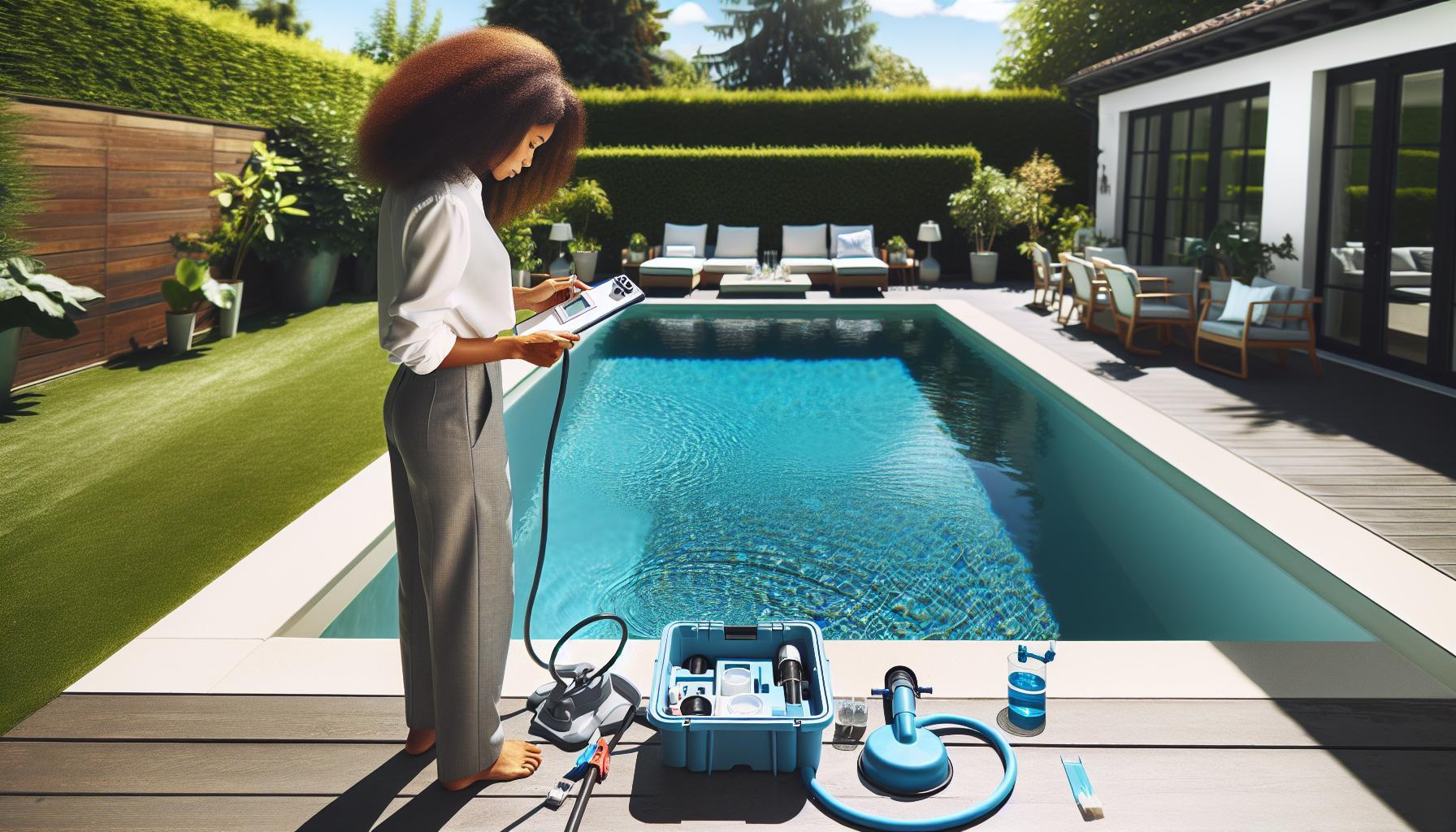
Did you know that the average residential swimming pool holds between 15,000 to 30,000 gallons of water? Understanding your pool’s volume is essential not just for enjoying leisurely swims, but also for effective maintenance, chemical balancing, and even energy consumption. Knowing how many gallons your pool holds can help you determine the right amounts of chemicals to maintain water quality and clarity.
Calculating your pool volume might seem like a daunting task, but it’s actually quite straightforward. Whether you’re a new pool owner looking to get a handle on maintenance or a seasoned swimmer seeking to optimize your pool experience, understanding your pool’s water capacity is key. This knowledge empowers you to make informed decisions, ensuring your pool remains a safe and inviting oasis. As we dive deeper into the calculation process, you’ll learn how to easily determine your pool’s volume, enabling you to tackle pool care like a pro.
Understanding Pool Volume Basics
Understanding the volume of your pool is essential for many reasons, from ensuring proper chemical balance to planning for maintenance and repairs. Knowing how many gallons are in your pool helps you make informed decisions regarding water treatments, filtration needs, and even heating your pool efficiently. Typically, a standard residential swimming pool can hold anywhere from 10,000 to 30,000 gallons of water, depending on its size and shape. However, accurately calculating this volume requires understanding the basic principles of pool measurement and water capacity.
To calculate your pool’s volume, you need to measure its dimensions accurately. For rectangular pools, you multiply the length by the width and then by the average depth. For circular or oval pools, the formula involves the radius and follows the same principle of measurement. It’s essential to note that variations in depth can affect the final calculations. While most pool owners can perform these calculations, utilizing pool volume calculators available online can simplify this process, providing immediate results based on your inputs.
When considering factors that affect water capacity, remember that different pool shapes-rectangular, circular, or kidney-shaped-will require specific calculations. Additionally, features like built-in steps or ledges can also impact the total volume of water your pool can hold. Therefore, measuring accurately is crucial.
In the pursuit of maintaining your pool’s performance, keeping an accurate record of its volume not only aids in adding the correct dose of chemicals but also helps in identifying potential leaks and water loss issues. By , you empower yourself to keep your pool in optimal condition, ensuring safety and enjoyment for all users.
Essential Pool Measurement Techniques
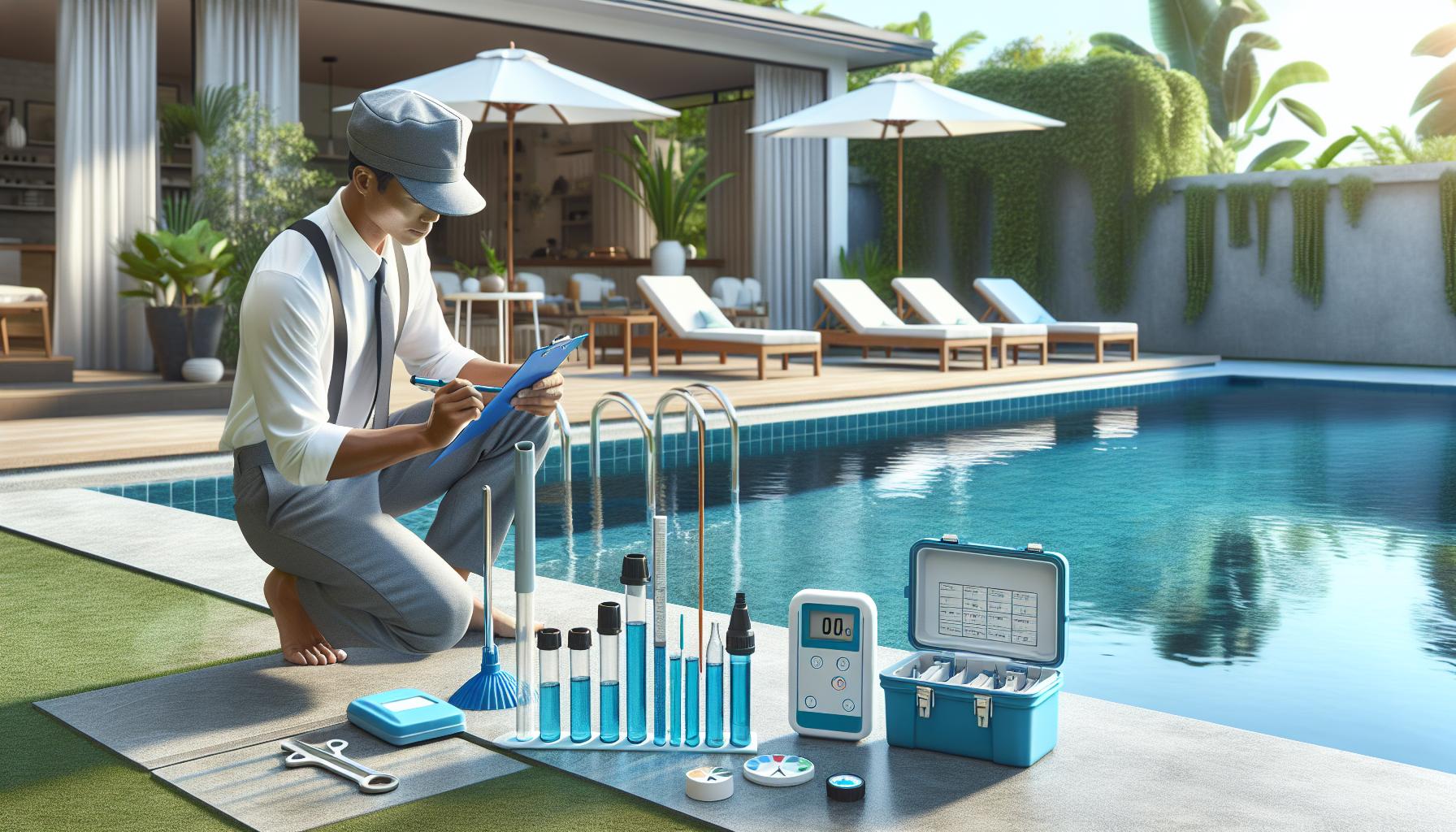
Measuring your pool accurately isn’t just a matter of knowing how big it is; it’s a fundamental skill that influences maintenance, treatment, and enjoyment. Many pool owners overlook this essential aspect, leading to imbalances and inefficiencies. By mastering basic pool measurement techniques, you can ensure that your pool not only functions optimally but also remains a refreshing retreat for family and friends.
To begin with, gather the necessary tools: a measuring tape, notebook, and perhaps a helper for larger pools. For rectangular pools, measure the length and width at their longest points. Multiply these numbers, and then multiply by the average depth. For instance, if your pool is 30 feet long, 15 feet wide, and has an average depth of 5 feet, the calculation would be: 30 x 15 x 5 = 2,250 cubic feet. Since there are 7.48 gallons in a cubic foot, simply multiply that sum by 7.48 to find the total gallons.
For circular pools, measure the diameter then divide by two to find the radius. Use the formula for the area of a circle (πr²) and then multiply by the average depth for the volume. For pools with unique shapes-like kidney or freeform-consider dividing them into simpler geometric shapes, calculate the volume for each, and then sum the totals.
Key Measurement Considerations
When measuring your pool, keep these tips in mind:
- Account for Steps and Ledges: Built-in features can reduce overall volume, so if your pool has these, take additional measurements to reflect their impact.
- Depth Variations: In many pools, the depth isn’t uniform. Ensure you measure the shallow, deep, and average depths accurately.
- Use Technology: Consider using a pool volume calculator; many online options exist that automatically do the math for you once you input your measurements.
By applying these measurement techniques diligently, you empower yourself as a pool owner. This knowledge not only aids in accurate chemical dosing and maintenance planning but also provides peace of mind as you enjoy your outdoor oasis.
Calculating Pool Volume: Step-by-Step Guide

Determining the volume of your pool is an essential aspect of pool ownership that directly affects maintenance and water treatment. Understanding how many gallons your pool holds can help you administer the right amount of chemicals for cleanliness and safety. To make this process straightforward, follow a systematic step-by-step guide tailored to various pool shapes.
Start by gathering your tools: a measuring tape, calculator, and a notebook. For rectangular pools, the formula is straightforward. Measure the length and width in feet, then calculate the area by multiplying these two dimensions. For instance, if your pool measures 25 feet in length and 10 feet in width, your calculation would be 25 x 10 = 250 square feet. Next, measure the average depth; if it varies, take the shallow end and deep end measurements, add them together, and divide by two. Suppose the shallow end is 3 feet and the deep end is 5 feet, the average depth is (3 + 5) / 2 = 4 feet. Thus, the total volume in cubic feet is 250 (area) x 4 (depth) = 1,000 cubic feet.
For circular pools, the calculations involve a bit more geometry. First, measure the diameter and divide by two to find the radius. If your pool’s diameter is 14 feet, the radius would be 14 / 2 = 7 feet. Use the formula for the area of a circle, which is π (pi) multiplied by the radius squared (πr²). In this case, it’s π x (7 x 7) ≈ 154 square feet. Finally, multiply this area by the average depth to find the volume. If the average depth is 4 feet, the total volume is 154 x 4 = 616 cubic feet.
For uniquely shaped pools, consider breaking them down into simpler geometric shapes-rectangles, triangles, circles-and calculate each shape’s volume before summing them up. This might involve estimating areas and depths for sections, so precision in measuring is crucial. Regardless of the shape, remember that after obtaining the volume in cubic feet, convert it to gallons by multiplying by 7.48, the number of gallons in one cubic foot.
Taking the time to calculate your pool volume accurately can significantly enhance your pool maintenance routine, ensuring the right water chemistry levels for a safe and enjoyable swimming experience.
Factors Affecting Pool Water Capacity
Determining your pool’s water capacity goes beyond simple calculations; various factors can significantly influence how much water your pool actually holds. Issues such as the pool’s shape, depth, and even environmental conditions all play a crucial role in accurately assessing water volume. Understanding these elements not only aids in pool maintenance but also ensures proper chemical balance and safety.
Shape and Design
The design of your pool affects its overall capacity. For instance, while rectangular pools have straightforward volume calculations, irregularly shaped pools require more complex methods. Breaking these pools down into simple geometric shapes allows for more accurate volumetric assessments. Consider a pool shaped like a figure-eight; each section must be calculated individually before combining the results.
Depth Variability
Depth varies in most pools, particularly those with shallow and deep ends. When measuring average depth, accurately averaging the shallow and deep areas is necessary to avoid underestimating the volume. If one end of your pool is shallow (3 feet) and the other is deep (6 feet), the average depth calculation influences the total volume significantly. Always ensure you take the deepest point into account for a more precise measurement.
Environmental Factors
Environmental conditions also contribute to water capacity challenges. Rainwater can increase pool volume temporarily, while evaporation during hot weather can decrease it. Regularly check water levels for fluctuations and adjust your pool maintenance schedule accordingly. Implementing a water level monitoring system can help identify these changes quickly.
Pool Accessories and Features
Finally, any additions to your pool can alter its water capacity dramatically. Features such as slides, built-in spas, or diving boards take up space, thereby reducing the total water volume. When calculating capacity, consider any accessories that occupy physical space in the pool for an accurate assessment.
By understanding and accounting for these factors, pool owners can maintain better control over their pool’s water management, ensuring safe and enjoyable swimming conditions year-round.
Comparing Different Pool Shapes and Sizes
To effectively assess your pool’s water capacity, understanding the relationship between various shapes and sizes is essential, as it directly affects both the calculation process and the pool’s overall usage. Each pool design presents unique characteristics that influence volume measurements, so grasping these distinctions is key to maintaining optimal water levels and balance.
For instance, rectangular pools are often the easiest to calculate, as they have a consistent depth and straightforward mathematical formulas to determine their volume. To find the volume of a rectangular pool, simply multiply the length, width, and average depth. This can be summarized in the formula:
[ text{Volume} = text{Length} times text{Width} times text{Average Depth} ]
Conversely, irregularly shaped pools, like kidney or figure-eight styles, require a more nuanced approach. To calculate the volume for these pools, break them down into simpler geometric components. For example, you can divide the overall shape into rectangles, circles, or triangles, calculate the volume for each individual shape, and then sum the results to find the total pool volume.
Square pools offer another set of simplicity, as they only require the length of one side multiplied by itself and then by the average depth to achieve the final volume. Utilizing such formulas ensures not only accuracy but also ease of calculation, which can be critical for maintenance routines and chemical balancing.
Notably, the depth of your pool also factors significantly into water capacity. Varying depths present challenges when calculating averages, especially in pools with both shallow and deep ends. When assessing depth, ensure to measure deep sections accurately and combine them with shallow measures to derive an average that reflects the entire pool.
Staying aware of your pool’s shape and how to approach its volume calculations empowers you to maintain a healthy swimming environment, while also preparing you for eventual modifications or enhancements you might consider down the line. Understanding these foundational elements not merely supports maintenance but enhances your pool experience.
Tips for Accurately Measuring Your Pool
To achieve precise measurements for your pool volume, it’s essential to approach the task with a clear plan and the right tools. Many pool owners underestimate the importance of accurate measurements; however, even a minor error can lead to significant discrepancies in your calculations and maintenance routines. Begin your measurement process by gathering essential items: a tape measure, a notepad for calculations, and a calculator or a mobile app for quick volume conversions.
Start by measuring the length and width of your pool. For rectangular or square pools, this process is straightforward: measure from edge to edge at the longest and widest points, respectively. For more intricate shapes, take multiple measurements at different points and consider the average. If your pool has a varying depth, such as a shallow end and a deep end, measure the depth at the shallowest and deepest points and calculate the average.
Calculating Average Depth
To determine the average depth, you can use the formula:
[ text{Average Depth} = frac{text{Shallow End Depth} + text{Deep End Depth}}{2} ]
This average will provide a more accurate volume calculation than simply using the depth of one end, particularly for pools designed with slopes.
Once you have all the necessary dimensions, it’s time to calculate the pool volume. For rectangular pools, the formula is:
[ text{Volume} = text{Length} times text{Width} times text{Average Depth} ]
For pools with unique shapes, consider breaking them down into smaller, manageable sections with geometric shapes and sum their volumes.
- Rectangular Pools: Use the straightforward formula above.
- Circular Pools: Use the formula (text{Volume} = pi times left(frac{text{Diameter}}{2}right)^2 times text{Depth}).
- Irrgular Shapes: Break into simpler shapes, calculate each volume, and sum them.
Finally, double-check your measurements and calculations for accuracy. Taking the time to carefully measure and confirm your results will not only help in understanding your pool’s capacity but will also aid in maintaining proper chemical balance and ensuring a healthy swimming environment. Whenever possible, consider re-measuring every few seasons or after any modifications to the pool, as landscape changes can subtly affect dimensions and volume.
Common Mistakes in Pool Volume Calculations
Calculating the volume of your pool might seem straightforward, but many owners make critical mistakes that can lead to inaccurate results and unnecessary complications. One common pitfall is relying solely on measurements taken from just one end of the pool, particularly in irregularly shaped or sloped designs. For instance, if you only measure the depth at the shallow end, you’ll miss the more substantial volume at the deep end. Always take both the shallowest and deepest points, then compute your average depth to reflect the true shape of your pool.
Another frequent error is not rechecking measurements prior to calculations. Pool dimensions can change subtly over time due to settling soil or weather impacts. Failing to reassess these numbers means risking significant discrepancies in your pool volume, which can affect water chemistry, maintenance routines, and storage needs for chemicals. Consider re-evaluating your pool dimensions annually or after significant weather events.
For pools with unique shapes, many owners think they can simply apply a single formula rather than breaking down the shape into smaller, manageable sections. For example, while you might treat a section of your kidney-shaped pool as a single entity, calculating each segment as a combination of simpler geometric shapes-like rectangles and semi-circles-will yield a far more precise volume. If your pool has attached features such as steps or benches, ensure these are factored into your calculations as well.
Finally, converting cubic feet to gallons is a commonly misunderstood task. Make sure you’re using the correct conversion factors: 1 cubic foot equals approximately 7.48 gallons. Therefore, a miscalculation in cubic dimensions can lead to substantial errors in your total volume reporting. To avoid these common mistakes, keep a sharp focus on your measurement process, recheck your work, and ensure that logic guides your arithmetic-not assumptions. With attention to detail and a systematic approach, you can achieve an accurate understanding of your pool’s capacity, ultimately contributing to better maintenance and enjoyment of your space.
How to Convert Pool Volume to Gallons
To convert your pool’s volume into gallons, you first need an accurate measurement of the pool’s volume in cubic feet. This conversion is crucial for maintaining water chemistry, managing water levels, and ensuring you’re using the right amount of pool chemicals. The key conversion factor to remember is straightforward: 1 cubic foot equals approximately 7.48 gallons. Therefore, knowing how to calculate this conversion accurately can save you time and effort in the long run.
Start by calculating your pool’s volume using measurements taken from its dimensions. For example, if you have a rectangular pool, use the formula:
Volume (cubic feet) = Length (feet) × Width (feet) × Average Depth (feet).
Once you have the volume in cubic feet, multiply it by the conversion factor:
Total Volume (gallons) = Volume (cubic feet) × 7.48.
For instance, if your pool measures 20 feet long, 10 feet wide, and has an average depth of 5 feet, its volume would be:
20 × 10 × 5 = 1000 cubic feet.
Now, multiply 1000 cubic feet by 7.48 to find the total gallons:
1000 × 7.48 = 7480 gallons.
It’s that simple! Keeping track of this information is not just useful for filling the pool but also for ensuring chemical treatments and balancing the water throughout the swimming season.
In summary, converting your pool volume to gallons is a straightforward process that begins with accurate measurements. Regularly assessing your pool’s dimensions and recalibrating your volume calculations not only ensures precise conversions but also enhances the overall maintenance and enjoyment of your swimming space. Make this conversion part of your regular pool care routine to keep everything in perfect balance.
Maintaining Your Pool’s Water Balance and Levels
Maintaining the right water balance and levels in your pool is crucial for enjoying clean, safe swimming conditions and optimal chemical performance. An unbalanced pool can lead to a number of issues, from algae growth to skin irritation. Regularly assessing and adjusting your pool’s water chemistry is not just about aesthetics; it’s about creating a safe and welcoming environment for swimmers.
To maintain your pool’s water balance, follow these steps:
- Test the Water Regularly: Use a reliable pool test kit to measure pH, alkalinity, and chlorine levels at least once a week. Ideal pH levels should be between 7.2 and 7.8, while alkalinity should be between 80-120 ppm (parts per million).
- Make Adjustments: If your pH or alkalinity is out of range, add the appropriate chemicals to bring levels back to normal. For example, if your pH is too low, add a pH increaser; if it’s too high, use a pH decreaser.
- Monitor Pool Water Level: Regularly check the water level in your pool. The water level should be within 1/2 inch of the mid-point of your skimmer. If it’s too low, you risk damaging the pump; if it’s too high, skimming effectiveness can be reduced.
- Maintain Circulation: Ensure your pool pump and filtration system are operating properly. This helps distribute chemicals evenly and keeps the water clear by removing debris and contaminants.
Keep in mind that factors such as weather, pool usage, and even the surrounding environment can affect your pool’s water balance. Heavy rains can dilute chemical levels, while increased swimmers can necessitate more chlorine. Developing a routine and closely monitoring these factors will empower you to maintain optimal water conditions effortlessly.
In the event of issues like cloudy water or persistent algae blooms, troubleshoot promptly by testing your water and shocking the pool with chlorine if necessary. Understanding these steps not only keeps your pool inviting but also extends the lifespan of your equipment, making pool ownership a more enjoyable experience. Regular maintenance checks and proactive adjustments will ensure that your pool remains a healthy and vibrant retreat throughout the swimming season.
Choosing the Right Type of Pool Cover
When it comes to protecting your pool and managing water volume effectively, the choice of pool cover is vital. A well-chosen cover can significantly reduce water evaporation, maintain water temperature, and keep debris out, all of which contribute to easier maintenance and optimal chemical balance. With numerous options available, understanding the features and benefits of each type can help you make the best decision for your pool.
One popular choice is the solid pool cover, which is durable and effective at preventing debris from entering the pool. Solid covers are typically made from heavy vinyl or similar materials and can be secured over your pool to block sunlight, reducing algae growth and evaporation. It’s important to ensure that your cover is well-fitted to prevent any gaps. Regular checks during the off-season are essential to ensure that there’s no sagging which could allow water accumulation, leading to potential structural damage.
Another viable option is the mesh pool cover. These covers allow water to pass through while keeping larger debris out, making them a preferred choice in areas with heavy rainfall. However, they do require regular maintenance as finer debris can still find its way through. Additionally, mesh covers are usually lighter and easier to handle, making them a practical choice for DIY pool owners.
For those looking for convenience, automatic pool covers provide a user-friendly solution that can be opened and closed with the push of a button. Not only do they help in maintaining pool hygiene and reducing chemical costs by limiting sunlight exposure, but they also offer enhanced safety, particularly in homes with children or pets. Keep in mind that installation can be more complex and costly compared to manual covers.
Choosing the right pool cover involves considering factors like climate, pool usage, and budget. Regardless of the cover type you select, regular inspections and maintenance are crucial to ensure longevity and functionality. Covers may need repairs or replacements if they become worn or damaged, so be vigilant. Ultimately, the right cover will not only enhance your pool’s lifespan and efficiency but also make your swimming experience more enjoyable.
Troubleshooting Pool Water Volume Issues
Maintaining your pool’s water volume is crucial for optimal performance and safety, especially since even minor fluctuations can impact chemical balances and overall pool health. Unexpected water loss can signal underlying issues that require immediate attention. Here’s how to identify, troubleshoot, and resolve common water volume problems.
First, it’s important to determine whether the drop in water levels is due to evaporation or leakage. Normal evaporation can account for about 1/4 inch to 1/2 inch per week, depending on weather conditions. However, if you notice a significant drop-more than 1 inch in a few days-this could indicate a leak. To check, perform the “bucket test”:
- Fill a Bucket: Place a bucket filled with water on the pool steps, ensuring the water level in the bucket matches that of the pool water.
- Mark the Water Level: After 24 hours, measure the water loss in both the pool and the bucket.
- Analyze the Results: If the pool water drops significantly more than the bucket, it’s likely that you have a leak.
Identifying Common Leak Sources
If a leak is suspected, inspect common problem areas, including:
- Pool Skimmers and Lights: Look for cracks or signs of damage.
- Plumbing Lines: Check for damp areas near the pool that might indicate a leak in the return lines.
- Main Drain: Make sure it’s sealed properly and not deteriorating.
- Vinyl Liners: Inspect for holes or tears that might be causing leaks.
If you find a leak but can’t locate the source, consider seeking the help of a professional who specializes in pool leak detection.
Addressing Evaporation Issues
If your pool is losing water due to evaporation, there are several strategies you can employ to minimize this loss:
- Use a Pool Cover: A solid or mesh cover reduces evaporation significantly. It also helps keep debris out and maintain water temperature.
- Add Landscaping: Planting trees or shrubs around your pool can provide shade, thus reducing water evaporation in hot weather.
Regular Maintenance and Monitoring
To avoid water volume issues, establish a routine maintenance schedule, which includes:
- Weekly Water Level Checks: Make it a habit to visually check your pool’s water level each week to catch any changes early.
- Regular Equipment Inspections: Ensure that pumps, filters, and heating systems are functioning correctly.
- Frequent Chemical Testing: Maintaining the correct chemical balance will not only prolong the life of your pool but also help track any unexpected volume changes more effectively.
By being proactive about monitoring and addressing potential water volume issues, you can ensure your pool remains an enjoyable and safe oasis. Regular inspections and timely interventions will prevent minor issues from escalating, allowing you and your guests to enjoy your pool to the fullest.
Upgrading Your Pool: When to Reassess Volume
Upgrading a pool can transform your outdoor space, adding value and enhancing enjoyment. However, even after installing a new feature, it’s essential to reassess your pool’s water volume regularly. Changes in the pool’s structure or usage can impact its capacity, leading to potential issues if not addressed. For example, if you’ve added a spa, waterfall, or additional features, they may require the pool to hold more water than originally calculated.
Start by recalculating your pool’s volume whenever you make significant modifications. Understanding the total capacity is crucial for proper chemical balancing, ensuring that your sanitation system operates effectively and that you maintain optimum water quality. Use the following formula to assess volume based on the pool shape:
Volume Calculation Formulas
- Rectangular Pool: Length x Width x Average Depth x 7.48 = Gallons
- Circular Pool: (π x Radius x Radius) x Average Depth x 7.48 = Gallons
- Oval Pool: (π x (Length/2) x (Width/2) x Average Depth x 7.48) = Gallons
Once you’ve reassessed the volume, consider the implications for your maintenance routine. An increased volume means that adjustments to chemicals, filtration cycles, and even heating will be necessary. For example, larger pools may require a longer filtering period to effectively circulate water and maintain clarity, while chemical doses will vary with volume changes.
Finally, if you’re considering significant upgrades, such as converting a traditional pool to a saltwater system or installing an automated management system, these changes can also affect the recommended volume. Consulting with a pool professional can provide tailored advice, ensuring your upgrades align with your water management needs. By staying proactive in reassessing your pool’s water volume, you’ll not only enhance your pool’s longevity but also safeguard the health and safety of your swimming environment.
FAQ
Q: How do I determine the volume of water in my pool?
A: To determine your pool’s volume, you need to measure its dimensions first. For rectangular pools, multiply the length, width, and average depth (Volume = Length x Width x Depth). For round pools, use the formula (Volume = π x Radius² x Depth). Ensure measurements are in feet to get the volume in cubic feet, then convert to gallons.
Q: What are the common factors that affect pool water capacity?
A: Factors affecting pool water capacity include the shape and size of the pool, the type of pool (above ground or in-ground), and any additional features like steps or ledges. Understanding these variables can help in accurately calculating your pool’s volume.
Q: How many gallons does an average residential pool hold?
A: An average residential pool typically holds between 20,000 to 30,000 gallons of water. However, this can vary greatly based on the pool’s size and shape, so it’s always best to calculate your specific pool volume for accuracy.
Q: Can the pool’s shape change how I calculate its volume?
A: Yes, the pool’s shape significantly impacts volume calculations. Rectangular, circular, and oval pools each have different formulas. Knowing the shape allows for precise volume calculations, ensuring proper maintenance and water balance.
Q: Why is it important to know my pool’s water volume?
A: Knowing your pool’s water volume is crucial for effective maintenance, including balancing chemicals, timing for filter operations, and calculating costs for filling or topping off the pool. Accurate volume helps keep your water in optimal condition.
Q: What should I do if I suspect my pool volume has changed?
A: If you suspect your pool volume has changed, remeasure your pool’s dimensions or check for leaks. Use the original calculation methods to reassess the volume. If issues persist, consider consulting a pool maintenance professional for a thorough inspection.
Q: How often should I recheck my pool’s volume?
A: It’s advisable to recheck your pool’s volume annually, especially after any renovations or significant changes in water level. Regular checks help ensure you have accurate data for maintenance and chemical balancing.
Q: Is there a tool to help me calculate my pool’s water capacity easily?
A: Yes, many online calculators simplify pool volume calculations. Simply input your pool’s dimensions, and the tool will compute the water capacity in gallons. These are handy for quick checks when you’re busy with pool care tasks.
Final Thoughts
Understanding the volume of water in your pool is crucial for effective maintenance and chemical balance. Now that you know how to calculate the gallons in your average pool, take charge of your pool care routine with confidence. Whether you’re preparing for a fun-filled summer or looking for tips on optimizing water quality, we have resources to help you along the way.
Explore our guides on pool maintenance tips and the best products to keep your water crystal clear and safe for swimming. Don’t forget to check out our top-selling pool supplies and equipment to make your pool care even easier. Have questions or want to share your pool experiences? Leave a comment below-we’d love to hear from you! Ready to dive deeper? Sign up for our newsletter for more expert advice and special offers tailored just for pool owners like you. Start making the most of your pool today!