


Resurfacing your swimming pool is not just a cosmetic upgrade; it’s essential for maintaining its longevity and safety. On average, the cost of resurfacing a pool can range widely, impacted by factors such as the pool’s size, surface material, and local labor rates. As a pool owner, understanding these costs is crucial to ensuring your investment remains in peak condition, preventing more significant repair expenses down the line.
Many pool owners find themselves overwhelmed by the various resurfacing options available, but knowing the costs upfront can ease that burden. Whether you’re looking to restore your pool’s original beauty or simply enhance its functionality, budgeting effectively is your first step to a successful project. Dive into this guide to explore the factors influencing resurfacing costs and make informed decisions that align with your goals and budget.
Understanding the Basics of Pool Resurfacing Costs
Understanding the costs associated with resurfacing a swimming pool is crucial for every pool owner. Typically, resurfacing can be seen as an investment that prolongs the life of your pool and enhances its aesthetics. The expense can range broadly, usually between $3,000 to $10,000 depending on several critical factors, including the size of the pool, the material used for resurfacing, and the labor costs involved. However, knowing the range isn’t enough; understanding what drives these costs can empower you to plan effectively and make informed decisions.
One significant factor influencing resurfacing costs is the type of material selected. Common options include plaster, pebble, and fiberglass – each varying in price and durability. For instance, plaster is often the cheapest option but may require more frequent maintenance and resurfacing, while fiberglass and pebble finishes, though pricier upfront, can offer greater longevity and less frequent upkeep. Furthermore, if your pool has special features such as a unique shape or intricate designs, this may increase labor costs due to the added complexity of the job.
Beyond materials, labor costs also fluctuate based on geographic location and the contractor chosen. Costs may be higher in urban areas compared to rural regions. Moreover, securing a reputable contractor is crucial, as their expertise can significantly affect the overall quality and longevity of the resurfacing work. To ensure you are making a sound investment, always consider getting multiple quotes and checking references before proceeding.
In conclusion, while the costs of pool resurfacing can seem daunting, a clear understanding of the factors influencing prices and careful consideration of your options can guide you in making a choice that best fits your budget and your pool’s needs. Whether you opt for the cheapest option or invest in a more durable finish, the key is to align your decision with long-term maintenance plans and your overall vision for your backyard oasis.
Factors Influencing Swimming Pool Resurfacing Prices
Resurfacing a swimming pool can seem like a daunting task, but understanding the intricate factors that influence costs can turn this challenge into an opportunity for a rewarding renovation. The costs associated with resurfacing are not just numbers on a bill; they stem from various aspects including material choices, labor, pool dimensions, and geographical considerations. Recognizing these elements empowers you to make informed decisions that can save money and enhance the quality of your pool.
Material Selection is perhaps the most significant driver of resurfacing costs. The type of material directly affects not only the initial investment but also future maintenance requirements. Common materials include:
- Plaster: Typically the most affordable option, plaster offers a smooth finish but may require more frequent upkeep and repairs.
- Pebble: A more durable choice, pebble finishes are aesthetically pleasing and provide better longevity, though they come at a higher upfront cost.
- Fiberglass: Known for its low maintenance and durability, fiberglass resurfacing can be a prudent investment, albeit one that requires a larger budget initially.
Moreover, if your pool features a unique shape or additional installations like spa areas or water features, these complexities will necessitate skilled craftsmanship, thereby increasing labor costs.
Labor Costs play a crucial role and can fluctuate based on your location and the contractor chosen. Areas with high demand may command higher rates. Additionally, the experience level of the contractor can affect costs significantly; a more experienced professional may charge more, but their expertise can result in better workmanship and longevity of the resurfacing. Be proactive in securing multiple quotes and check references to ensure you are getting the best possible value.
Ultimately, understanding these key factors not only prepares you for the financial commitment associated with pool resurfacing but also equips you to successfully navigate the selection process, ensuring that your investment leads to a stunning and durable swimming pool that you can enjoy for years to come.
Average Cost Breakdown: Materials and Labor
Resurfacing a swimming pool is not only a critical maintenance step but also an investment that can enhance your backyard oasis’s appearance and longevity. Understanding the average costs associated with materials and labor can help you budget effectively and avoid common pitfalls. Typically, the total cost for resurfacing a pool can range from $3,000 to $10,000, depending on various factors such as pool size, type of material selected, and labor expenses.
The materials you choose will greatly affect the final expenditure. Here’s a general overview of material costs:
- Plaster: Ranges from $2 to $5 per square foot. This is often the most cost-effective option, but it may require reapplication every 5 to 10 years.
- Pebble Aggregate: Costs between $4 and $12 per square foot. While it is more expensive upfront, it offers greater durability and aesthetic appeal, lasting 15 to 25 years or more with proper care.
- Fiberglass: Average costs range from $6 to $10 per square foot. Fiberglass provides a smooth finish and requires minimal ongoing maintenance, making it a popular choice for many homeowners.
Labor costs can vary significantly based on complexity, location, and contractor experience. On average, you can expect to pay between $1,500 and $3,500 for labor, depending on the intricacy of the job and the going rates in your area. Some contractors may charge a flat rate, while others may bill hourly. To get the best price, it’s advisable to obtain multiple quotes and verify the contractor’s credentials and past work. Remember, investing a bit more in skilled labor can result in a superior finish that extends the life of your pool surface.
Overall, a clear breakdown of material and labor costs provides a solid foundation for your budget planning, setting you on the path to a beautifully resurfaced pool that meets all your leisure needs.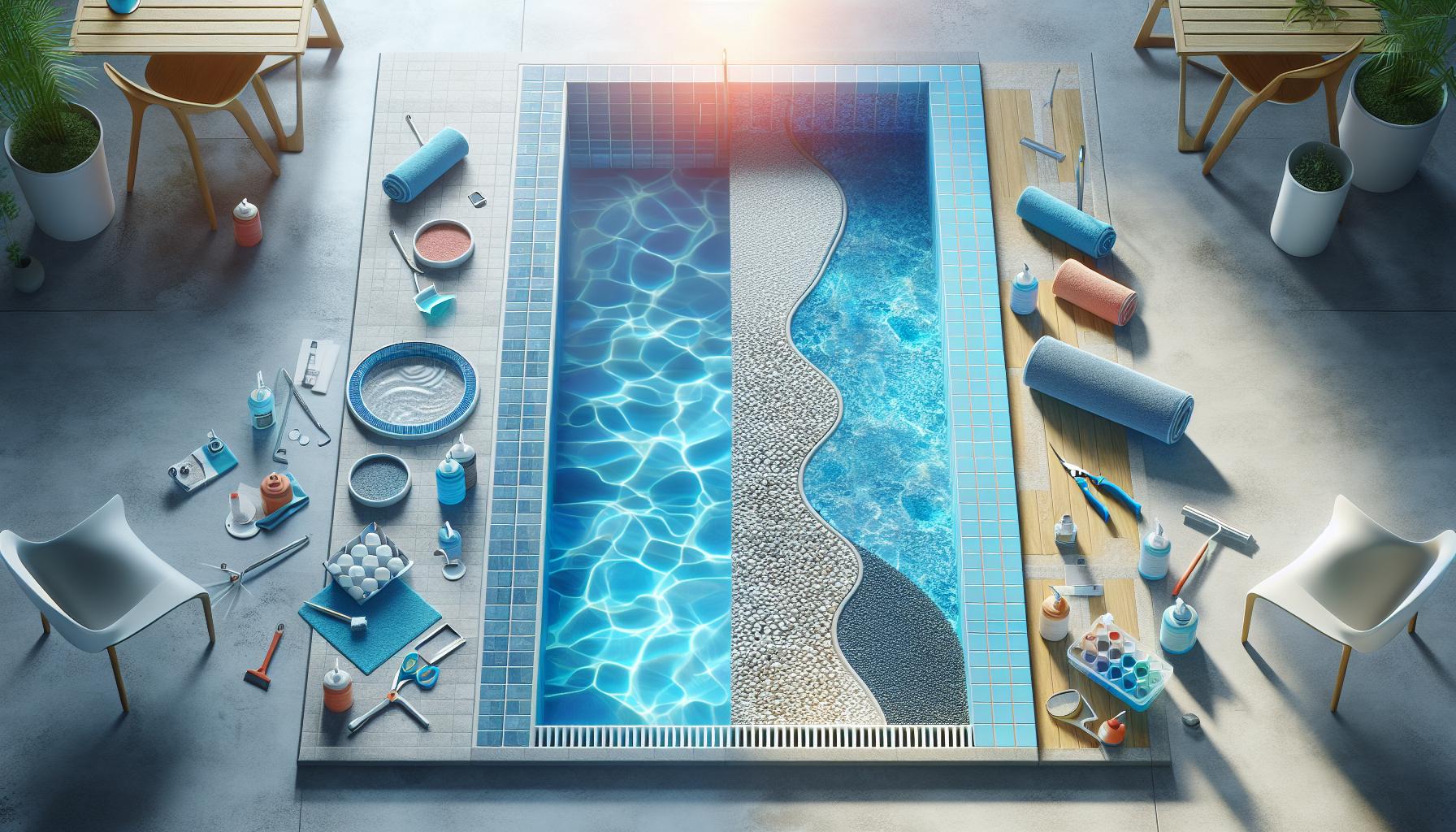
Comparing Different Pool Resurfacing Options
When considering resurfacing your pool, it’s crucial to understand the various options available, each differing in terms of costs, durability, maintenance requirements, and aesthetics. The choice of material can significantly impact not only your initial investment but also the long-term upkeep and enjoyment of your pool.
Plaster
Plaster is one of the most traditional and widely used pool resurfacing materials. It is generally the least expensive option, costing between $2 and $5 per square foot. Despite its affordability, plaster typically requires more frequent upkeep and may need to be redone every 5 to 10 years, depending on water chemistry and usage. While it’s smooth and provides a classic look, some homeowners might find it less visually appealing compared to aggregates.
Pebble Aggregate
For those looking for durability and enhanced aesthetics, pebble aggregate could be the right choice. With costs ranging from $4 to $12 per square foot, this surface incorporates small stones and provides a more textured finish. Not only does it offer a unique appearance, but it also boasts a lifespan of 15 to 25 years or more when properly maintained. This option is resistant to stains and cracks, making it ideal for climates with significant temperature fluctuations and heavy pool use.
Fiberglass
Increasingly popular among pool owners, fiberglass resurfacing offers a smooth, non-porous surface that resists algae growth and is easy to clean. The costs for fiberglass resurfacing typically range from $6 to $10 per square foot. While it may be more expensive initially, its longevity and minimal maintenance needs can lead to savings over time, making it a worthwhile investment for many. Furthermore, fiberglass surfaces are less likely to chip and are available in a variety of colors.
Comparison Table
| Material | Cost per Square Foot | Durability (Years) | Maintenance Frequency |
|---|---|---|---|
| Plaster | $2 – $5 | 5 – 10 | Every 5-10 years |
| Pebble Aggregate | $4 – $12 | 15 – 25+ | Every 10-15 years |
| Fiberglass | $6 – $10 | 10 – 20+ | Minimal; clean as needed |
Ultimately, the best resurfacing option will depend on your budget, aesthetic preferences, and how much maintenance you’re willing to undertake. By weighing the pros and cons of each material, along with their associated costs, you can make an informed decision that ensures your pool remains not only functional but also an attractive addition to your home.
DIY vs. Professional Pool Resurfacing: Which Should You Choose?
When faced with the decision of resurfacing your pool, the choice between taking on the project yourself or hiring a professional can significantly impact both your budget and your peace of mind. A DIY approach may initially seem like a cost-saving solution, often appealing to homeowners who want to minimize expenses. However, this path requires not only a solid understanding of the resurfacing materials but also the manual skills to apply them effectively. For example, the preparation of the pool surface and the application of materials like plaster or epoxy can be labor-intensive and messy, demanding attention to detail to avoid costly mistakes.
Taking the professional route typically guarantees a higher level of expertise and experience. Professionals are trained to handle the nuances of different resurfacing materials, ensuring they are applied correctly and perform optimally over time. This can be especially beneficial when it comes to more complex options like pebble aggregate or fiberglass, where improper installation can lead to issues like peeling or uneven surfaces. The peace of mind that comes with a warranty or guarantee for professional work can also be invaluable, as it often covers unexpected repairs that might arise in the future.
For those contemplating a DIY project, it’s essential to consider the hidden costs that can arise from errors or the need for rework. Investing in quality materials is essential, and a DIY project may require renting equipment, purchasing tools, or even accounting for additional labor if you can’t complete the job alone. On the other hand, if you decide to engage a professional, be sure to get multiple quotes and inquire about their experience, as the initial higher expense could save you time and give you a more durable finish.
In summary, while DIY resurfacing projects can yield savings, they require significant effort, skill, and understanding of swimming pool chemistry and repair techniques. Weighing the pros and cons of each option is crucial, ensuring that your final decision aligns with your skill set, available time, and budget for resurfacing your pool effectively.
Hidden Costs to Consider When Resurfacing a Pool
When resurfacing a pool, it’s essential to consider that the upfront costs for materials and labor may not encompass the complete financial picture. Many homeowners overlook additional expenses that can arise throughout the resurfacing process, potentially leading to budget overruns. Understanding these hidden costs can ensure a more accurate and comprehensive financial plan.
One significant hidden cost is the preparation work that may be required before applying the new surface. This might include repairs to cracks or structural issues, which can vary significantly in price depending on the extent of the damage. If you are considering a DIY approach, be aware of the potential expense involved in renting heavy machinery, such as a jackhammer or pressure washer, which are sometimes necessary for surface preparation. Additionally, tools that you may not already own, including trowels or mixers, can add to your expenses if purchased rather than rented.
Another often-overlooked aspect is cleanup and disposal fees. Removing old materials and debris is typically a messy job that requires proper disposal-whether it means hiring a dumpster service or paying landfill fees. This can also include costs for protective gear or chemicals for cleaning existing surfaces to ensure proper adhesion of the new layers.
Moreover, it’s vital to account for unexpected repairs that might arise during the resurfacing process. Discovering plumbing leaks, electrical issues related to lighting, or additional algae growth can require immediate funds that may not have been allocated initially. These emergencies can push your budget significantly higher if you’re not prepared to address them promptly.
Lastly, the potential for delayed timelines should not be underestimated. Changes in weather conditions can extend the resurfacing timeline, affecting contractor availability and potentially leading to increased costs for labor if hired professionals are used. To prepare for these contingencies, setting aside a contingency fund of 10-20% of your total resurfacing budget can provide the necessary financial cushion for unforeseen expenses.
By carefully evaluating these hidden costs, you can create a more accurate budget for your pool resurfacing project, ensuring you’re financially prepared for the entire process from start to finish.
Budgeting Tips for Swimming Pool Resurfacing
When embarking on the journey of resurfacing your swimming pool, establishing a robust budgeting strategy is crucial to ensure a successful and financially manageable project. One common misstep is underestimating the total costs involved, often leading to unexpected financial strain. To avoid this pitfall, begin by conducting thorough research and gathering multiple quotes from reputable contractors. This not only gives you a clearer idea of market rates but also helps identify any potential discounts or packages available.
Another important consideration is to separate your budget into clear categories: materials, labor, preparation, and unexpected costs. Prioritize placing emphasis on the quality of materials, as they can significantly impact the longevity of your resurfaced pool. For instance, opting for a more durable surface like aggregate can save you money in the long run by reducing the need for frequent repairs or resurfacing. Evaluating and comparing the costs of different resurfacing options-such as plaster, pebble, or fiberglass-can help align your budget with your desired aesthetic and functional outcomes.
Furthermore, maintaining an emergency fund-typically around 10% to 20% of your total budget-can alleviate stress during the project. This fund should cover unforeseen expenses such as repairs to plumbing or electrical systems, which can often surface once work begins. Be proactive by conducting a thorough inspection of your pool prior to the resurfacing process to identify any potential issues that may require attention.
Lastly, leverage off-seasons for potential discounts. Pool resurfacing tends to peak during warmer months; scheduling your resurfacing during slower periods can reduce both labor costs and material prices. By following these budgeting tips and being prepared for the various facets of pool resurfacing, you can navigate the project smoothly while ensuring you get the most value out of your investment.
Choosing the Right Time for Pool Resurfacing
Timing is crucial when it comes to pool resurfacing, as it can significantly impact both costs and the success of your project. Ideally, late summer or early autumn are the most favorable seasons for resurfacing your pool. During these months, contractors generally experience a lull in business-this can lead to lower labor rates and more flexibility with scheduling. Additionally, by completing the resurfacing before winter, you can ensure that your pool is ready to go for the following swimming season without any last-minute rush.
Consider the current condition of your pool when deciding when to resurface. Signs such as fading, cracking, and rough surfaces indicate it may be time to take action. Addressing these issues sooner rather than later can prevent further deterioration and potentially higher repair costs down the line. If you can time the resurfacing for post-inspection of these problems, you’re already setting yourself up for a more efficient project.
Moreover, keep an eye on weather forecasts. Scheduling your resurfacing project during a dry spell helps ensure the materials cure properly. Rain or extreme heat can complicate the application and drying process, leading to suboptimal results and additional expenses. Consulting with your contractor about the best climatic conditions for your specific resurfacing material can further enhance these outcomes.
In summary, careful attention to seasonal patterns, the state of your pool, and weather conditions will allow you to choose the most opportune time for resurfacing, ensuring a smooth and cost-effective process.
Signs Your Pool Needs Resurfacing Now
A swimming pool is not just a luxury; it’s a significant investment in your home and lifestyle. To keep this asset functional and enjoyable, it’s essential to recognize when your pool needs resurfacing. Ignoring the signs can lead to more extensive damage and higher repair costs down the line. Look for the following indicators that it’s time to take action:
- Visible Cracks and Chips: If you notice cracks or chips on the pool surface, it’s a glaring sign that resurfacing is necessary. These imperfections can escalate if left untreated, leading to leaks and costly repairs.
- Rough Texture: A pool’s surface should feel smooth. If your feet often snag or hurt on the plaster, it’s a sign that the finish is degrading and needs to be restored.
- Fading Color: Over time, the vibrant color of your pool may fade due to sun exposure and chemicals. If your pool looks dull and lifeless, resurfacing can rejuvenate its appearance.
- Staining and Algae Growth: Persistent stains or algae buildup can indicate that the pool surface is no longer properly sealed. A new surface will not only eliminate these issues but also improve water quality.
- Increased Maintenance Needs: If you’re finding yourself spending more time and money on maintenance due to the pool’s surface condition, resurfacing could save you from future headaches and costs.
When you recognize these signs, don’t delay in scheduling a professional inspection. Addressing resurfacing needs promptly will extend the life of your pool and enhance your enjoyment during the swim season. Remember, maintaining your pool not only preserves its aesthetic appeal but also ensures safety and functionality for family and friends alike.
How to Prepare Your Pool for Resurfacing
Preparing your pool for resurfacing is a crucial step that can significantly influence the outcome and longevity of the new surface. To ensure a smooth and successful resurfacing process, it’s essential to follow a systematic approach. First, start by completely draining the pool. Use a submersible pump to remove all water, ensuring that the pool is bone dry before any work begins. This step not only makes it easier to assess the current condition of your pool but is also vital for the new surface to adhere properly.
Once the pool is drained, inspect the interior surface for any underlying issues. Look for cracks, chips, or areas where the plaster is crumbling. If these problems are extensive, consider addressing them before resurfacing. Fill any large cracks with hydraulic cement and smooth out uneven surfaces as needed. Depending on the condition of your pool, you might also need to consult with a professional who can provide guidance on more extensive repairs that may be necessary.
After addressing any damage, it’s time to prepare the pool for the resurfacing material. Start with a thorough cleaning to eliminate any dirt, debris, or algae that could interfere with adhesion. Use a pressure washer or a scrub brush with a suitable cleaning solution to ensure the surface is spotless. Pay special attention to corners and edges, as these areas can often accumulate more grime. Following the cleaning, rinse the surface well to remove all cleaning agents that could compromise the bond of the new surface.
Lastly, check the weather forecast before scheduling the resurfacing. It’s best to choose a day with mild temperatures and no chance of rain, as weather conditions can affect the installation process and the final result. Properly preparing your pool not only sets the stage for an effective resurfacing but can also help you avoid future headaches and additional costs down the line. Be proactive and detailed in your preparation to ensure that your pool remains an inviting space for years to come.
Financing Options for Pool Resurfacing Projects
Financing a pool resurfacing project can often seem imposing, especially when considering the average costs that can range from $3,000 to $10,000 depending on materials and labor. However, with the right financing options, you can manage these expenses without breaking the bank. Exploring various avenues can help you achieve a beautifully resurfaced pool while maintaining your financial stability.
One of the most common methods is through personal loans. Many banks and credit unions offer unsecured personal loans specifically for home improvement projects. These typically have competitive interest rates and can be paid off over several years, easing the financial burden. Be sure to compare rates and terms to choose the best option that suits your budget. Another option is a home equity line of credit (HELOC), where you can borrow against the equity in your home. This may provide lower interest rates, but it’s essential to understand the risks involved, as your home serves as collateral.
Additionally, some pool contractors offer financing plans, allowing you to spread out your payments over time. These plans often come with promotional rates or deferred payment options, making them appealing. It’s advisable to read the fine print to ensure there are no hidden fees or high-interest charges after the promotional period ends. Lastly, consider checking for any local or state programs that offer home improvement financing. Some municipalities have initiatives aimed at improving the community’s aesthetics, which can include grants or zero-interest loans for projects like pool resurfacing.
As you navigate these options, it’s crucial to budget carefully. Create a detailed plan that includes not just resurfacing costs but also ancillary expenses such as cleaning, chemical treatments, and maintenance following the resurfacing job. By preparing for these additional costs, you can ensure a smooth financing experience and enjoy your resurfaced pool all summer long.
Maintaining Your Resurfaced Pool for Longevity
To ensure that your resurfaced pool remains in prime condition for years to come, regular maintenance is key. Investing time and effort into proper care not only enhances the beauty of the pool but also keeps potential repair costs at bay. Did you know that a well-maintained surface can extend the lifespan of your pool by several years? Here are some essential practices to follow.
Routine Cleaning
Maintaining a consistent cleaning schedule is crucial. Brush the walls and floor of the pool weekly using a pool brush designed for your specific surface type-be it plaster, pebble, or vinyl. This removes dirt and algae that can adhere to the surface and lead to early wear. Additionally, use a vacuum cleaner specifically designed for pools to keep the floor free from debris.
Water Chemistry Management
Maintaining the balance of your pool’s chemistry is another crucial aspect. Test the water at least once a week, focusing on pH levels, alkalinity, and chlorine concentration. The ideal pH range is between 7.2 and 7.6. Imbalanced water chemistry can lead to etching or scaling, which can damage the resurfaced area. Consider investing in a reliable test kit or utilizing services from local pool stores to ensure your water chemistry is spot on.
Regular Inspections
Conducting periodic inspections of your pool can help catch small issues before they escalate. Look for cracks, peeling, or discoloration on the surface. If you identify any problems, address them immediately. Small repairs can often be done with over-the-counter patch kits specifically designed for pool surfaces.
Proper Water Levels
Keeping your pool at the right water level is vital not just for safety but also for the integrity of the resurfacing. Ensure that your pool’s water levels do not drop significantly. Low water levels can expose the surface to sunlight, leading to premature fading and deterioration. Maintain the recommended water level, typically just above the skimmer.
By implementing these maintenance steps, you can prolong the life of your resurfacing job and enjoy your pool’s aesthetic and functional benefits for a longer time. Regular care will protect your investment and ensure that you and your family can enjoy your pool season after season.
Faq
Q: What is the average cost range for resurfacing a swimming pool?
A: The average cost for resurfacing a swimming pool typically ranges from $3,000 to $10,000, depending on the pool size, material used, and labor costs. For a more precise estimate, it’s essential to consider local rates and specific conditions of your pool as highlighted in the budgeting guide.
Q: How can I estimate labor costs for pool resurfacing?
A: Labor costs for pool resurfacing are usually calculated per square foot and can range from $15 to $50 per hour, depending on the contractor’s expertise and your location. Always request quotes from multiple contractors to find the best price while ensuring quality work.
Q: What factors could increase the cost of resurfacing a pool?
A: Factors that could increase resurfacing costs include structural repairs, extensive damage to the pool surface, the choice of high-end materials, and additional features like tile work or high-end finishes. Budgeting for unexpected expenses is wise when planning your resurfacing project.
Q: Are there financing options available for pool resurfacing projects?
A: Yes, many homeowners explore financing options like home equity loans, personal loans, or contractor financing plans. It’s advisable to analyze interest rates and repayment terms to select a plan that fits your budget effectively, as discussed in the budgeting tips section.
Q: How long does the resurfacing process take?
A: The resurfacing process typically takes about 3 to 7 days, depending on the pool size and the type of resurfacing material used. This timeframe includes preparation, resurfacing, and curing periods, ensuring you plan for any downtime effectively.
Q: What maintenance should I do after resurfacing my pool?
A: After resurfacing, maintain your pool by balancing chemical levels, cleaning regularly, and avoiding harsh cleaners that can damage the new surface. Following these steps ensures the longevity of your resurfaced pool, aligned with the maintenance guide in your article.
Q: When is the best time of year to resurface a swimming pool?
A: The best time to resurface a pool is during warmer months when temperatures are consistently above 70°F. This ensures optimal curing conditions for the resurfacing material, contributing to a longer life span for your newly resurfaced pool.
Q: What are the different types of materials used for pool resurfacing?
A: Common materials for pool resurfacing include plaster, aggregate, pebble, and fiberglass. Each material has its own cost, durability, and aesthetic appeal, making it crucial to research and compare options in your article’s “Comparing Different Pool Resurfacing Options” section.
Closing Remarks
As you consider the costs associated with resurfacing your swimming pool, remember that investing in this essential maintenance can extend the life of your oasis and enhance your swimming experience. By understanding the factors that influence these costs, you can make informed decisions that align with your budget and needs. If you’re feeling overwhelmed, don’t hesitate to reach out for professional advice or explore our comprehensive resources on pool maintenance tips and cost-saving strategies.
For more insights, check out our articles on the importance of regular pool maintenance and choosing the right materials for your pool resurfacing project. If you have any questions or need assistance, we’re here to help! Your journey to a pristine pool starts now-join our newsletter for expert tips and exclusive offers, and take the plunge into your pool’s care today!


